
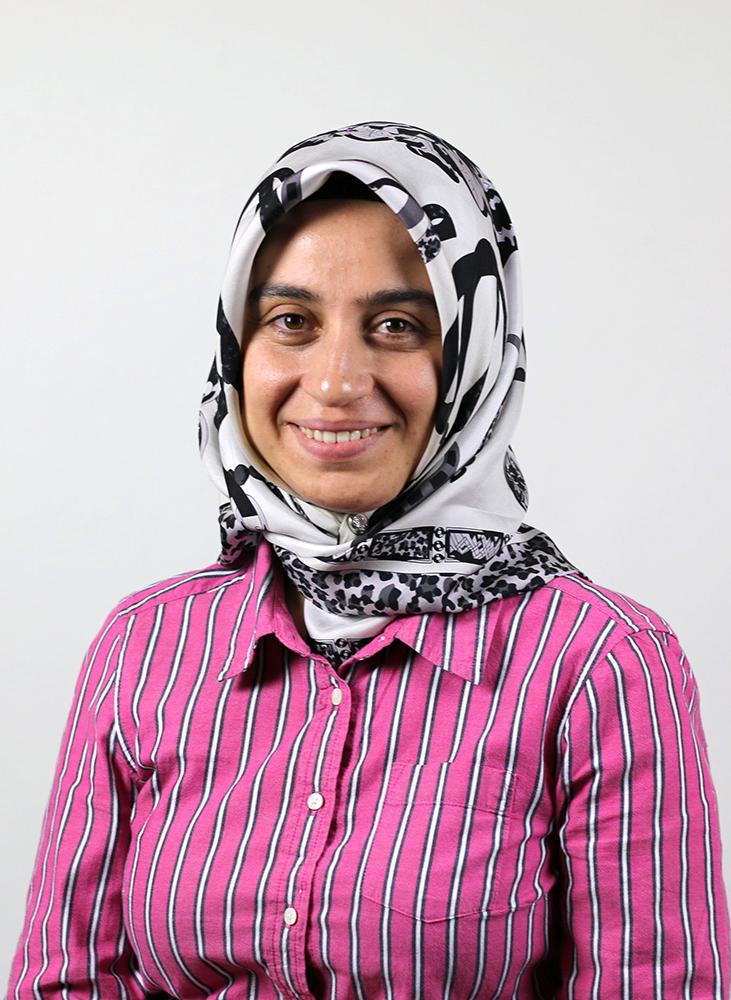
Director of Educational Outreach

Education
- Ph.D. Educational Technology, Minor in Quantitative Methodologies (2018), Georgia State University
- M.A/ Educational Studies (2011), Edgewood College, Madison, WI
- B.S. Computer Science (2008), Bilgi University, Istanbul, Turkey
- B.A. Business Administration (2007), Bilgi University, Istanbul, Turkey
Expertise
- Engineering Education, Diversity in Engineering
About
Dr. Tuba Ketenci is a Senior Academic Professional and non-tenure track faculty member in the Stewart School of Industrial and Systems Engineering at the Georgia Institute of Technology. Dr. Ketenci had a double major with B.S. degree in Computer Science and Business Administration, an M.S. in Educational Studies, and a Ph.D. in Educational Technology with a concentration in Research, Measurement, and Statistics. Her expertise includes instrument development, social network analysis, and quantitative methods in education research, including Hierarchical Linear Modeling and Structural Equation Modeling.
With this foundation, Dr. Ketenci’s role extends beyond individual courses or programs to a broad leadership portfolio that spans engineering education, outreach, and institutional impact. As Director of Educational Outreach, she leads the School’s engineering education and outreach portfolio, designing pipeline programs that reach more than 700 students and over 50 teachers each year, organizing four to five signature events each semester including the Probability and Statistics Competition, and developing and managing grants that expand access to rigorous engineering learning experiences while teaching and mentoring Georgia Tech students. She also serves as Chair of the College of Engineering Community Council and represents the Institute nationally as Co-Chair of the INFORMS Education Committee. In addition, she leads ISyE’s dual enrollment efforts and contributes to yield initiatives that support recruitment, access, and undergraduate student success.
Research
Her earlier research focuses on improving K-12 engineering education through research on curriculum and test development, and the development of students’ computational thinking in technology-enhanced environments. As part of her graduate studies, she directed a study that focused on measuring engineering curriculum impact on students’ computational thinking and 21st-century skills. She also worked with a research group for online undergraduate education, and her role involves social network analysis and emotion analysis to measure changing leadership patterns among students’ online discussion posts and to analyze the relationship between students’ emotions in their discussion posts and their leadership level.
More recently, her scholarship has increasingly focused on postsecondary education, particularly on innovative teaching practices, analytics driven instruction, and the responsible use of emerging technologies in undergraduate classrooms. Her current work examines how authentic, data driven course experiences can deepen student learning, as well as how generative artificial intelligence tools are reshaping student behavior and assessment practices in higher education.
Teaching
Dr. Ketenci’s teaching is student-centered and guided by Universal Design for Learning. She creates an inclusive and supportive classroom where students feel comfortable participating, making mistakes, and asking for help. Her courses emphasize active, hands-on, and project-based learning so students build understanding through doing, discussing, and applying concepts.
To strengthen both learning and classroom community, Dr. Ketenci regularly uses brief peer to peer problem solving during class. Students spend a few minutes working together to solve a question, explain their thinking, and compare approaches. These short activities help students practice collaboration, build confidence, and develop the comfort to ask a classmate for support. Over time, this routine encourages connection and friendship, which makes it easier for students to stay engaged and persist through challenging material.
Dr. Ketenci also prioritizes clear instruction. She provides well-organized materials, explicit expectations, and step-by-step explanations so students can follow complex ideas without feeling overwhelmed. She incorporates new technologies when they improve access, clarity, or engagement, and she uses thought-provoking questions and carefully selected videos to connect course concepts to real situations and spark curiosity.
Although writing is not typically required in mathematics courses, Dr. Ketenci intentionally assigns writing to help students practice communicating analytical work in a professional format. One key assignment asks students to prepare a conference-style proposal using analytics. Students define a problem, explain their approach, and describe why their analysis matters. This experience helps students see how quantitative reasoning is shared beyond the classroom and strengthens their ability to present technical ideas clearly.
Overall, Dr. Ketenci combines technical rigor with inclusive course design, active learning, and peer collaboration. Her goal is for students to develop strong quantitative skills while also gaining confidence, communication ability, and the habits of teamwork that support long-term success.
Awards and Honors
- Outstanding Empirical Journal Award
- Outstanding Dissertation Award
- Outstanding Ph.D. Student Award
- Full Scholarship, Istanbul Bilgi University
- Merit scholarship from Private Asfa High School
Representative Publications
Sapirstein, A., Steimle, L. N., Ketenci, T., Williams, K., & Williams, L. (2025, minor revision). Teaching statistics using facility location modeling: A course-based undergraduate research experience. INFORMS Transactions on Education.
Serban, N., Ketenci, T., & Sokel, J. (2025, major revision). Students’ use of generative AI tools in multiple-choice exams. INFORMS Transactions on Education.
Ketenci, T., Calandra, B., Cohen, J., Renken, M., & Chonoeva, N. (2023). An examination of middle school student learner characteristics as related to the reuse and remixing of code in two different computer science learning contexts. Journal of Research on Technology in Education, 55(6), 986–1002.
Ketenci, T. (Major revision submitted). Impact of sequence of lessons and practices in explicit instruction on middle school students’ performance in a programming context. ACM Transactions on Computing Education.
Ketenci, T., Calandra, B., & Cohen, J. (2022). An examination of middle school student learner characteristics and remixing practices in two different CS learning contexts. Journal of Research on Technology Education.
Ketenci, T., & Dwortz, C. (2022). Online computing summer camp with non-verbal students with autism spectrum disorder. In Proceedings of the Association for Educational Communications and Technology (AECT). Las Vegas, NV.
Calandra, B., Renken, M., Cohen, J. D., Hicks, T., & Ketenci, T. (2021). An examination of a group of middle school students’ engagement during a series of afterschool computing activities in an urban school district. TechTrends, 65(1), 17–25.
Ketenci, T., Leroux, A., & Renken, M. (2020). Beyond student factors: The impact of student and school factors on attaining STEM careers. Journal of STEM Education.
Kim, M. K., Wang, Y., & Ketenci, T. (2020). Who are online learning leaders? Piloting a leader identification method (LIM). Computers in Human Behavior, 105, 106205.
Kim, M. K., & Ketenci, T. (2020). The role of expressed emotions in online discussions. Journal of Research on Technology in Education, 52(1), 95–112.
Ketenci, T., Kumar, K., & Kim, M. (2020). Emotion analysis for discussion board posts. In D. Schmidt-Crawford (Ed.), Proceedings of the Society for Information Technology & Teacher Education International Conference (pp. 777–783). Association for the Advancement of Computing in Education.
Ketenci, T., Calandra, B., Margulieux, L., & Cohen, J. (2019). The relationship between learner characteristics and student outcomes in a middle school computing course: An exploratory analysis using structural equation modeling. Journal of Research on Technology in Education.
Margulieux, L., Ketenci, T., & Decker, A. (2019). Review of measurements used in computing education research and suggestions for increasing standardization. Computer Science Education.
Kim, M. K., & Ketenci, T. (2019). Learner participation profiles in an asynchronous collaboration context. The Internet and Higher Education, 41, 62–76.
Ketenci, T., & Erkan, B. (2019). The relationship between young students’ attitudes toward collaboration and team satisfaction in a STEAM-based program. In Proceedings of the 14th International Conference on Computer Supported Collaborative Learning. Lyon, France.
Renken, M., Cohen, J. D., Ayer Ketenci, T., Calandra, B., & Fuqua, A. (2017, June). Who signs up and who stays? Attraction and retention in an after-school computer-supported program. In B. K. Smith, M. Borge, E. Mercier, & K. Y. Lim (Eds.), Making a Difference: Prioritizing Equity and Access in CSCL. Proceedings of the 12th International Conference on Computer Supported Collaborative Learning (Vol. 1, pp. 359–366). Philadelphia, PA: ISLS.