
Education Evolved:
From First Steps to Future Leaders
By Brandy Blake and Dima Nazzal
The H. Milton Stewart School of Industrial and Systems Engineering (ISyE)’s undergraduate and graduate programs have long set the national standard in the field because of its world-class faculty, groundbreaking research, and innovative education portfolio.
The School’s expansive portfolio began with the leading Bachelor of Science in Industrial Engineering (BSIE), a flexible, multi-track undergraduate program with seven concentrations. Over time, ISyE added multiple master’s degrees; a rigorous Ph.D. pathway; a broad offering of technical, professional, and executive master’s education certificates; and robust K-12 outreach programs.
Today, as technological, economic, and societal systems become more interconnected and complex, ISyE is reviewing its educational portfolio to prepare graduates to navigate, and lead within, these evolving environments. Few fields are better suited than industrial and systems engineering to confront this growing complexity.
“We’re reviewing the content of our programs to identify core principles and advanced competencies — particularly those unlocked by our domain strength of systems thinking in an artificial intelligence (AI)-powered world — that our graduates will lead with over the next few decades,” explained Dima Nazzal, associate chair for academic administration at ISyE.
Guided by this vision, ISyE is redesigning its curriculum and delivery of tools and modes that harness the latest educational technologies, including project-based and interactive learning, and embedding opportunities to build cross-cutting skills, such as collaboration, communication, leadership, and independent thinking. These experiences ensure that graduates can navigate rapid innovation and complex systems with confidence and a growth mindset.
To put this vision to practice, a faculty steering committee — chaired by Nazzal who is joined by Brandy Blake, Yu Ding, Alan Erera, Johannes Milz, Alejandro Toriello, and Chen Zhou — was recently formed. Committee members identified four strategic pillars:
- Systems Thinking
- Business and Technical Communication
- AI Integration
- Experiential Learning
These pillars will guide ISyE’s curriculum design and delivery — ensuring students receive a rigorous and relevant education grounded in real-world problem-solving.
“Higher education is going through yet another major transformation,” said Pinar Keskinocak, H. Milton and Carolyn J. Stewart School Chair and professor in ISyE. “We will continue to build on our strengths, be intentional and innovative in advancing our educational programs, empower our students with essential skills, and support lifelong learning and well-being.”
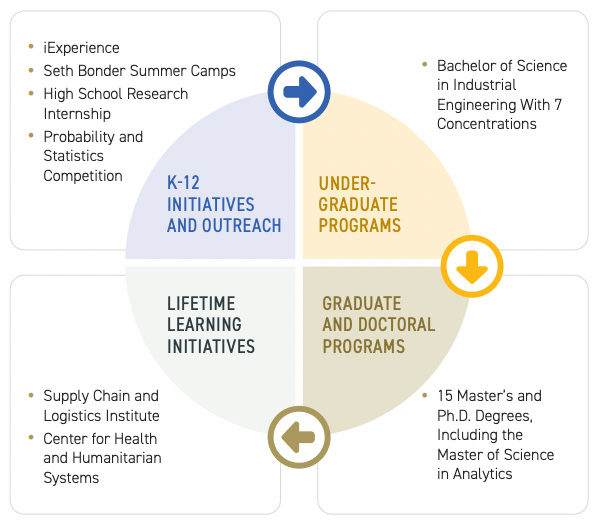
ISyE's Education Portfolio Throughout the Learning Lifecycle
Reimagining Curriculum Design and Delivery
1 Systems Thinking
Advance students' ability to analyze and design compex, interconnected systems through modeling tools, interdisciplinary collaborations, and real-world case studies.
2Business and Technical Communication
Strengthen students’ ability to deliver audience-targeted messaging — from data visualizations to cross-functional presentations — and benchmark this approach against industry standards, thus ensuring graduates communicate with clarity and influence.
3 AI Integration
Integrate AI/machine learning foundational and decision-making competencies across core courses — selecting platforms, defining essential skills, curating real-world case studies, and emphasizing ethical considerations — for graduates to lead responsibly in an AI-enhanced world.
4Experiential Learning
Bridge theory and practice by expanding industry partnerships, deepening domain-specific experiences, enhancing project-based and case study-based learning, and engaging career-track advocates across the consulting, finance, IT, manufacturing, and logistics fields.
“We’re reviewing the content of our programs to identify core principles and advanced competencies — particularly those unlocked by our domain strength of systems thinking in an AI-powered world — that our graduates will lead with over the next few decades."
— DIMA NAZZAL, ASSOCIATE CHAIR FOR ACADEMIC ADMINISTRATION, ISyE
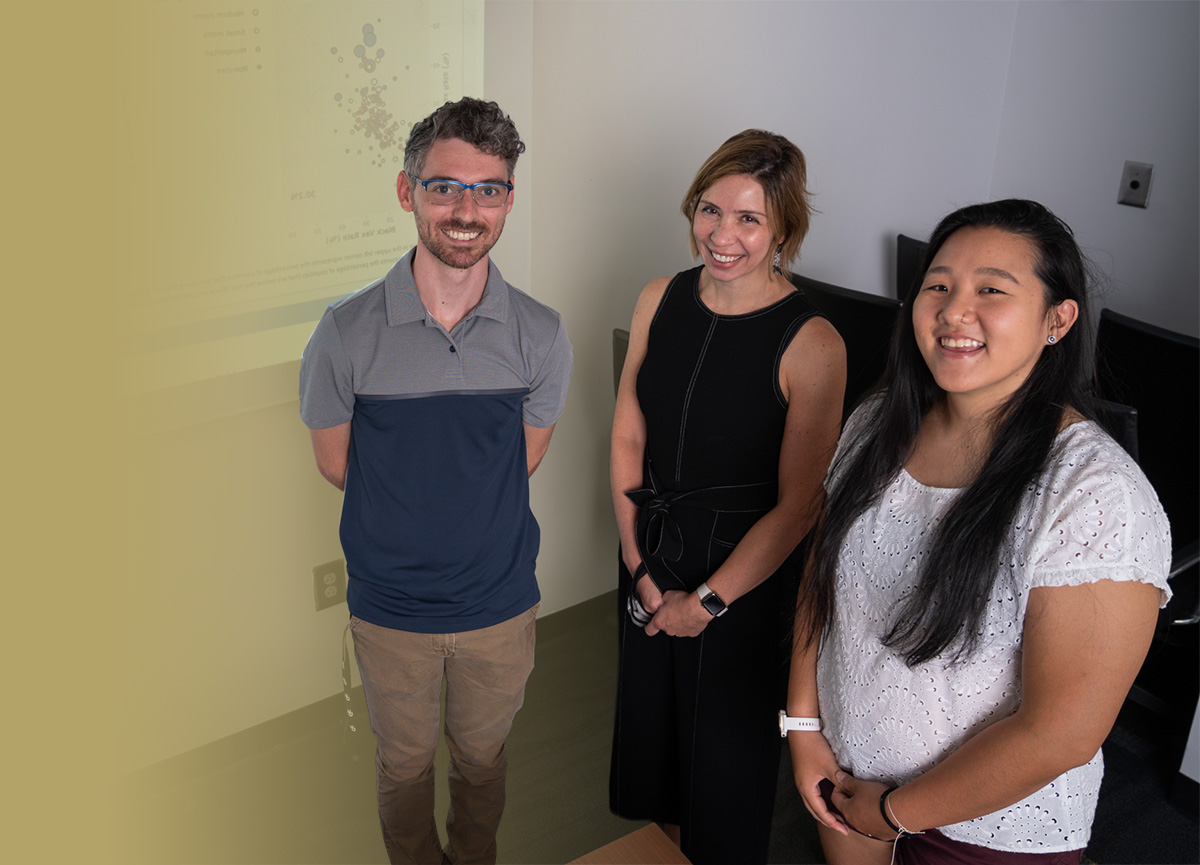

Empowering Future Engineers and Data Scientists
K-12 INITIATIVES AND OUTREACH
High school students interested in STEM are often introduced to mechanical or computer engineering through robotics or coding classes. Whereas, industrial and systems engineering — the unseen force behind countless industries — remains a hidden gem to students because its problem-solving applications are so varied.
Through its K-12 initiatives and outreach, ISyE is educating high school students about the career possibilities within the dynamic world of engineering and data science.
Inspiring Young Innovators
iExperience Summer Program Introduces High School Students to ISyE and Its Partners
iExperience is a weeklong, immersive summer program that introduces high school students across Georgia to the vast career opportunities in the industrial and systems engineering field. From playing computer games about supply chains to learning how AI recognizes human faces, students gain insights on how the field is solving complex problems. Students also explore the Georgia Tech campus and visit partner companies and organizations.
Last summer, students toured The Coca-Cola Company and PwC to see real-world applications of industrial and systems engineering as well as “a day in the life” of a Georgia Tech graduate.
Cash Gilmore, a rising senior from Seoul Foreign School in South Korea, enjoyed a firsthand look at the inner workings of one of the world’s most iconic brands, The Coca-Cola Company. “It was interesting how the company uses partners to manage different areas of the supply chain,” he said. “It’s all connected, and they are able to work together to create a finished product and deliver it to their customers.”
His observation highlights the complexity and collaboration needed for Coca-Cola’s operations — a system built not on a single factory but on strategic partnerships that add syrup and carbonated water to its recognizable bottles around the world.
For Samantha Stetter, a rising senior at Dunwoody High School, she embraced each site visit as a chance to reimagine what a career in industrial and systems engineering could be.
“Our goal is to help students discover the career possibilities within our field while also developing essential skills like teamwork and communication,” said Nicoly Myles, director of ISyE’s Center for Academics, Success, and Engagement, which hosts the program in partnership with the Center for Education Integrating Science, Mathematics, and Computing (CEISMC). “It’s exciting to watch students connect their passions with real-world applications and start envisioning themselves not just as future college students, but as future problem solvers."
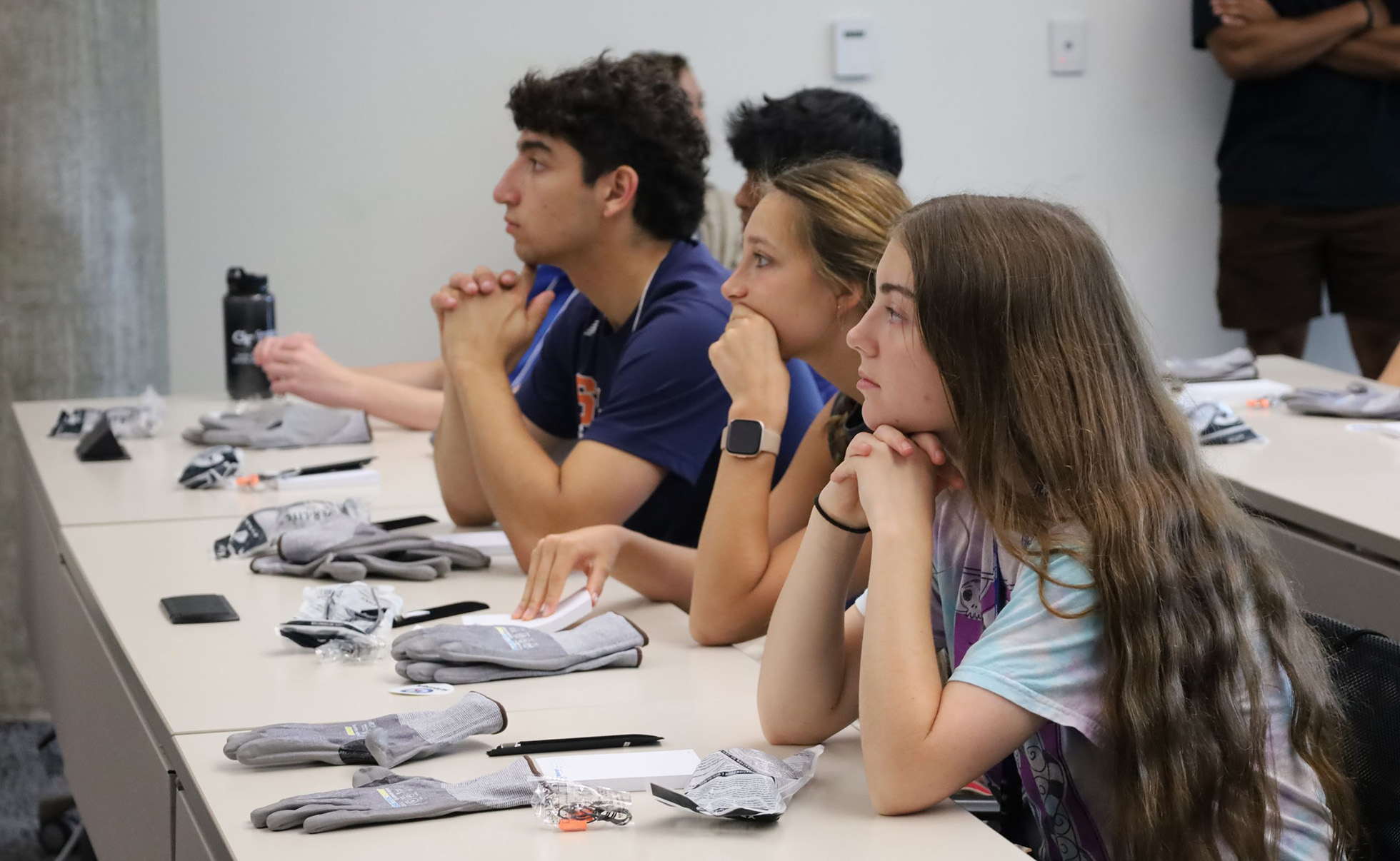
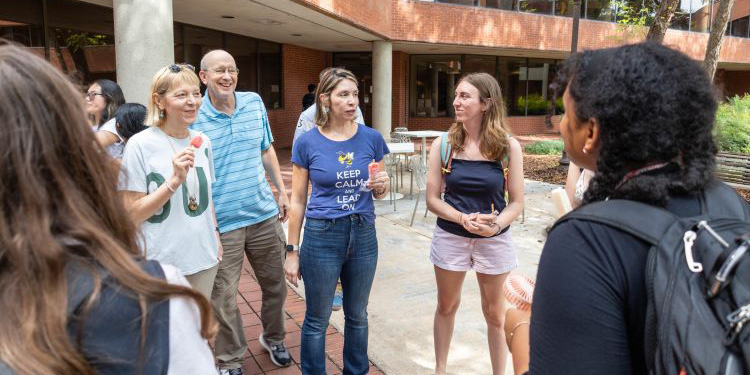
Photo by Camille Carpenter Henriquez. / High school students learn about career opportunities in the industrial and systems engineering field during iExperience, a weeklong, immersive summer program.
Planting Seeds of Possibility
ISyE High School Research Interns Become Published Scholars
The Industrial and Systems Engineering High School Research Internship immerses ambitious high school students in real-world research while exploring core concepts of industrial engineering.
Guided by Tuba Ketenci, director of educational outreach at ISyE, four students — Makaylah Deshield, Rana Kalayci, Thihini Nagendran, and Hansika Yerramseti — recently completed the internship. Over the course of three curated classes and two data science projects, these researchers developed and published studies on key educational factors, which, according to Ketenci, is an impressive feat for any high schooler.
To raise awareness about this internship opportunity, Ketenci and team visited local high schools — reaching more than 300 students — and engaged them in interactive sessions, group discussions about college life, and hands-on demonstrations.
“Most importantly, our outreach planted seeds of possibility — showing students what’s out there and what’s possible for them,” added Ketenci.
Calling the Next Generation of Statistical Thinkers
Probability and Statistics Competition Draws Over 100 High School Students Across the Globe
Each year, ISyE hosts its Probability and Statistics Competition, a two-stage event drawing talented high school students across the globe.
The competition starts in February with an online round that attracts over 100 students, then the top 40 scorers advance to the finals, which are held in April on Georgia Tech’s campus. Samhitha Kovi, a student at Lambert High School who is dual enrolled at Georgia Tech, won the competition in 2025.
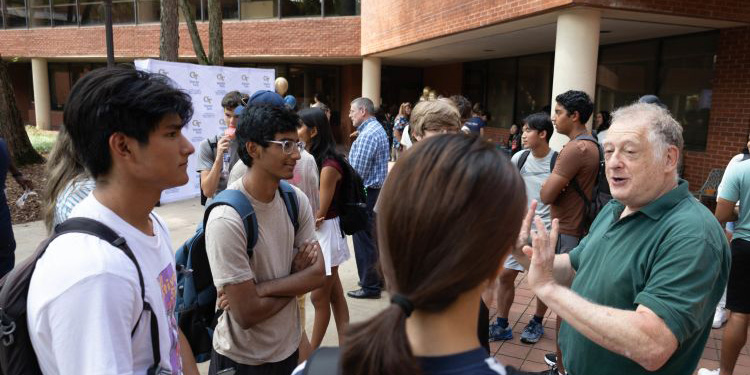
“We’ve been consistently impressed by these terrific, bright students,” said ISyE’s Coca-Cola Foundation Professor David Goldsman. “They’re going to make great industrial engineers!”
Finalists experience a vibrant day of intellectual exploration — participating in interactive workshops, live demonstrations, and discussions with graduate students and industry professionals. The event wraps up with a campus tour, offering a glimpse into life at one of the top engineering schools.
“This competition sparks an early appreciation for the beauty and impact of probability and statistics, inspiring students to think critically about uncertainty in the world around them,” said Debankur Mukherjee, Leo and Louise Benatar Early Career Professor and associate professor in ISyE.
SIDEBAR
Unlocking the Power of AI at an Early Age: Seth Bonder Summer Camps Bring Over 100 High School Students to Georgia Tech
In addition to iExperience, the Seth Bonder Summer Camps brought 117 high school students from across the region to Georgia Tech last summer for an immersive journey into computational thinking, data science, and AI. Hosted by NSF’s AI Institute for Advances in Optimization (AI4OPT) and CEISMC and supported by the Seth Bonder Foundation, the camps ran in two sessions — the first two levels in June and the next two levels in July — to provide a structured pathway from beginner programming to advanced AI exploration. By offering a clear progression, the Seth Bonder Summer Camps are playing a vital role in building a diverse and well-prepared pipeline of future engineers, scientists, and innovators.
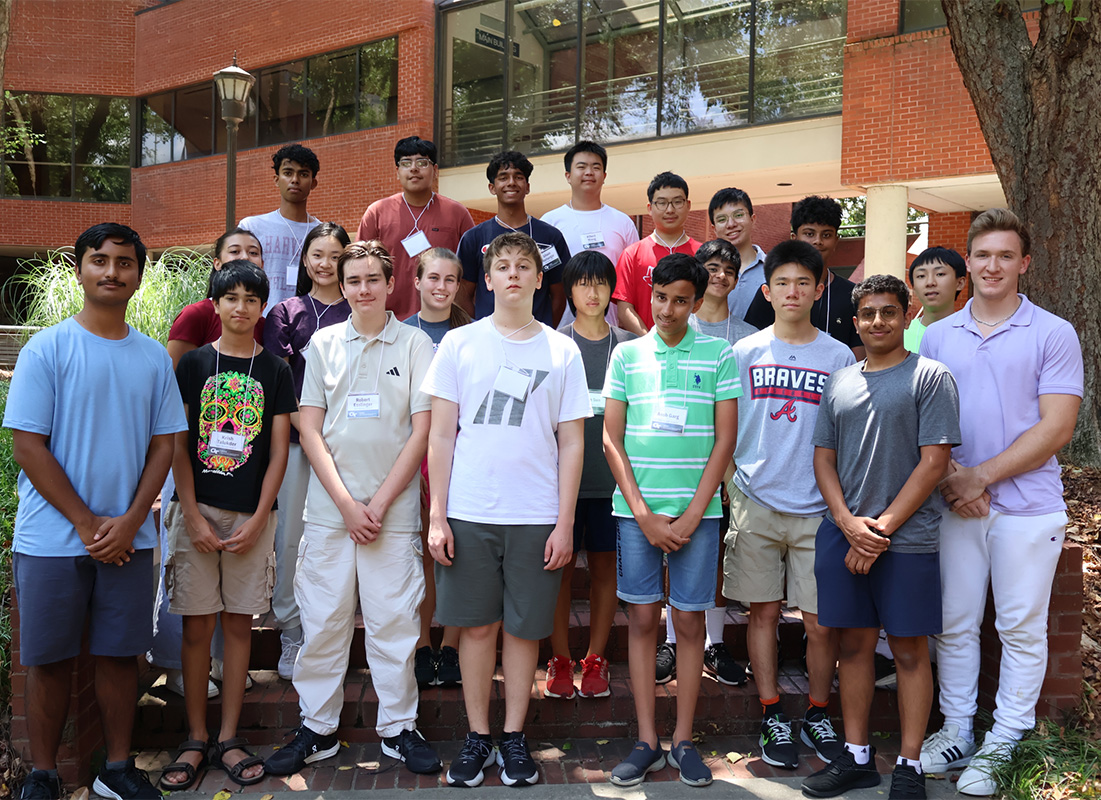
Photo by Jackelyn Bjorne, AI4OPT. / High school students explore programming and AI in the Seth Bonder Summer Camps.
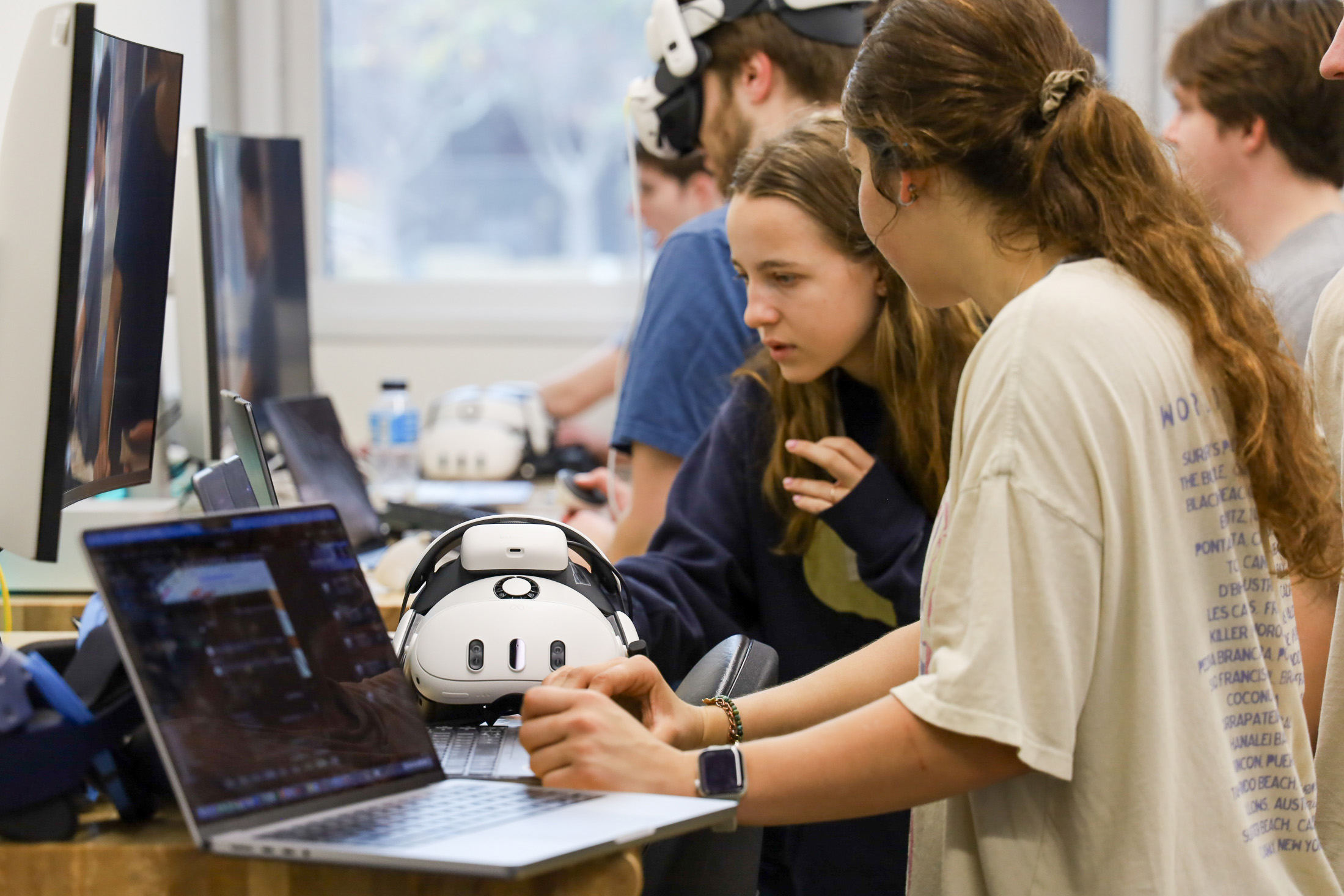
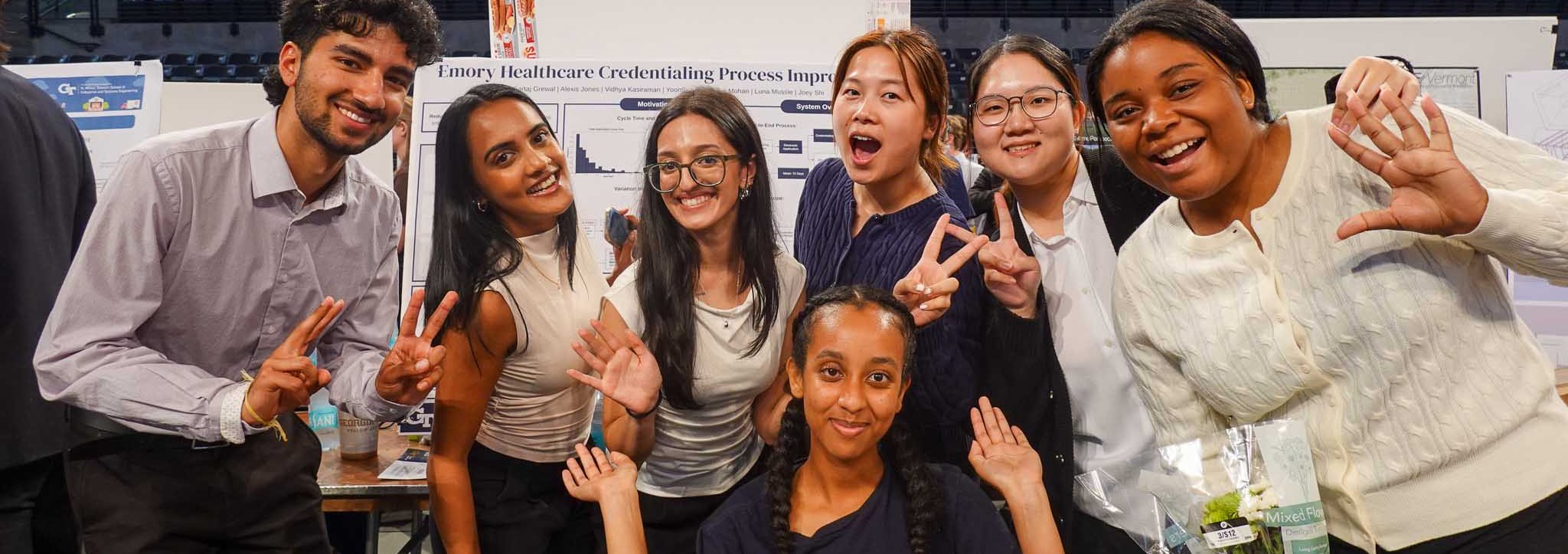
Photo by Camille Carpenter Henriquez. / ISyE’s top ranked undergraduate program offers a solid foundation for students to develop analytical and problem-solving skills and opens doors to a wide range of career opportunities.

Opening Doors for Undergraduates
EVOLVING THE NATION'S LEADING BSIE PROGRAM
ISyE’s Bachelor of Science in Industrial Engineering (BSIE) has been ranked the No. 1 program of its kind in the nation for 25 consecutive years according to U.S. News & World Report. While its national reputation draws many students, the program is also distinguished by its concentrations and diverse learning pathways.
As part of ISyE’s broader Strategic Initiative to review and redesign the curriculum, the School is strengthening the BSIE program to ensure it reflects emerging competencies and evolving industry expectations.
ISyE’s Advisory Board recently launched a task force — comprising Don Shinedling (chair), Ciera Gillis, Ken Klaer, Errika Moore, and Kyle Zeman — to work in close collaboration with ISyE’s Faculty Steering Committee. Together, they are ensuring that BSIE graduates continue to possess the skills and knowledge needed for a rapidly changing technological and professional landscape.
The Advisory Board contributes industry perspective, real-world use cases, market alignment, and insight into current and future skill needs. The Faculty Steering Committee brings cutting-edge research, disciplinary depth, and expertise in the analytical and systems models that define the field — combined with leadership in curriculum design, pedagogical innovation, and accreditation and implementation. This collaboration unites the best of academia and industry to advance a BSIE curriculum that is both intellectually rigorous and aligned with the evolving demands of practice.
Culminating Project to Solve Real-World Problems
Senior Design Winning Team Supports Expansion, Saves $5.2 Million for BMW
All BSIE graduates culminate their education with Senior Design, a largescale, team-based capstone experience in which more than 340 students each year work on real-world engineering projects for local, national, and international clients.
“Senior Design challenges students to think broadly, work across constraints, and deliver practical value to a real client,” said Nazzal. “It’s a systems thinking and design experience that prepares them for the complexity of practice.”
In Spring 2025, the “Grand Slammers” team won Georgia Tech’s Capstone Design Expo monodisciplinary Industrial Engineering Award while the Best of ISyE Senior Design Award — based on a comprehensive evaluation of technical strength, communication, and professionalism — was awarded to the “Smooth Operators” team who collaborated with BMW to support its expansion goals in Spartanburg, S.C. They analyzed the company’s 8 million-square-foot production campus — focusing on how to improve high transit times, queue spikes, and yard usage — to save BMW $5.2 million in one year.
Over a period of eight months, the team learned the importance of leveraging their resources (including faculty feedback) and leaning into their strengths. “We were able to scope the project based on our strengths, such as creating Python code and doing financial analysis,” explained Anna Harper (IE 2025).
“This project gave me the confidence to take into my future career,” said Athena Malek (IE 2025). “BMW implemented our team’s solutions, which proved the last four years of hard work at Tech was definitely worth it.”
Some of the Capstone Design finalists’ projects included improving picking efficiency and new automation technology in a Coca-Cola warehouse in Argentina and reducing inventory costs and idle time in aluminum production for Novelis.
SENIOR DESIGN TEAMS
Photos by Camille Carpenter Henriquez
Grand Slammers
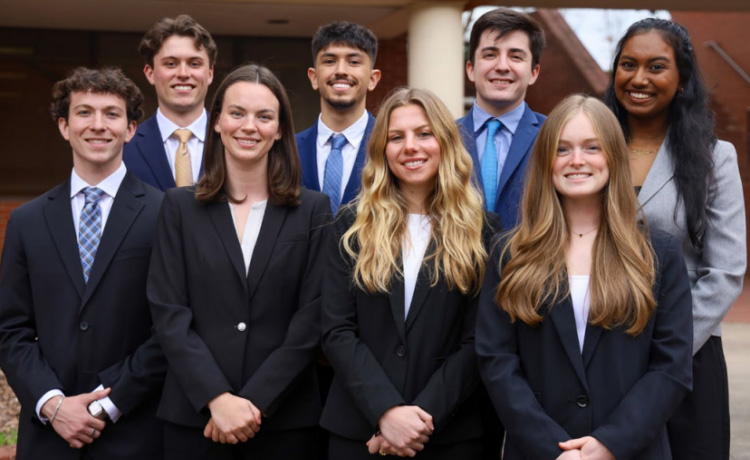
CLIENT: Atlanta Braves
MEMBERS: Ethan Asbell, Oliver Davidson, Tyler Hankin, Bre Kaplan, Apoorva Mahendranath, Diego Mora, Anna Taylor, Hailey Toeppner
ADVISOR: Craig Tovey
PROJECT: The team developed a data-driven methodology to strategically place promotions and giveaways that could maximize ticket sales for the Atlanta Braves — generating up to $1.6 million in additional annual revenue.
AWARDED: Winner of the Capstone Expo Monodisciplinary Award, Spring 2025
Smooth Operators
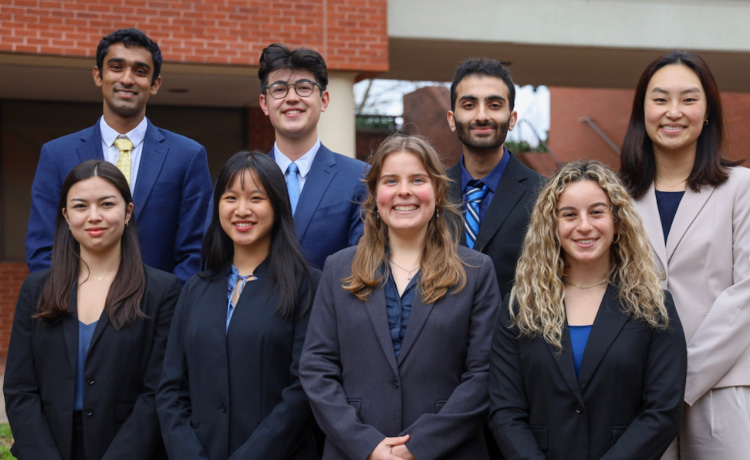
CLIENT: BMW
MEMBERS: Neal Damani, Anna Harper, Amy Kim, Athena Malek, Aman Momin, Hagen Shook, Sydney Tang, Anna Zhao
ADVISOR: Arthur Delarue
PROJECT: The team addressed traffic flow challenges arising from the continued expansion of BMW’s Spartanburg, S.C. campus. Their recommendations generated $5.2 million in annual savings, positioning BMW to handle a 50% increase in production volume.
AWARDED: Winner of the Best of ISyE Senior Design Competition, Spring 2025
Scrap Happens
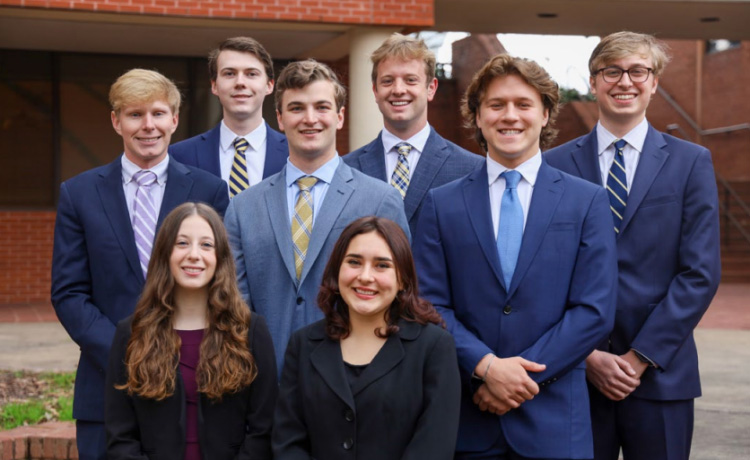
CLIENT: Novelis
MEMBERS: Hannah Fleshler, Rhese Goodsite, Mckenna Hall, Parker Hallock, Caleb Key, Matthew Manno, Ted Moll, Jack Stewart
ADVISOR: Craig Tovey
PROJECT: By proposing a reduction in intermediate SKUs through delayed product differentiation, and managing any associated cost, they developed a solution that simplifies operations and enhances system flexibility. Their recommendations enable Novelis to accept more contracts and meet deadlines without expanding existing storage capacity.
AWARDED: Finalists in the Best of ISyE Senior Design Competition, Spring 2025
Picking the Pop
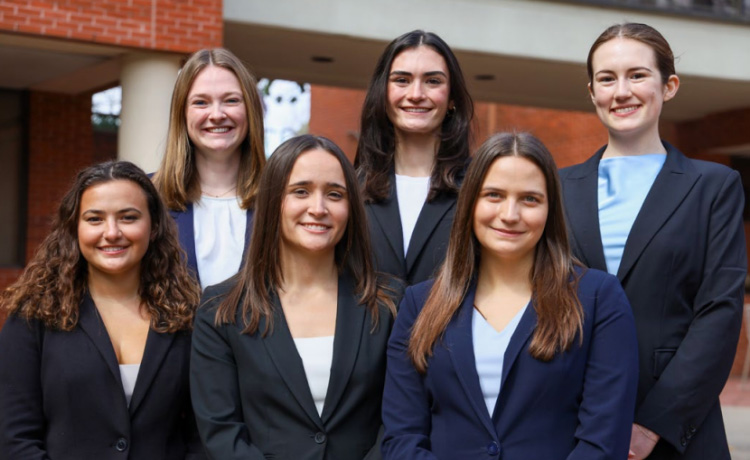
CLIENT: The Coca-Cola Company
MEMBERS: Emma Blazejewski, Aden Cobb, Elizabeth Lawrence, Courtney Maley, Catherine Serek, Kaitlyn Thompson
ADVISOR: Gunter Sharp
PROJECT: The team redesigned a Coca-Cola Argentina warehouse to increase efficiency and reduce costs — delivering short-term and long-term picking time improvement, reducing reliance on external warehousing, and significantly improving full pallet retrieval.
AWARDED: Finalists in the Best of ISyE Senior Design Competition, Spring 2025
Freight Club
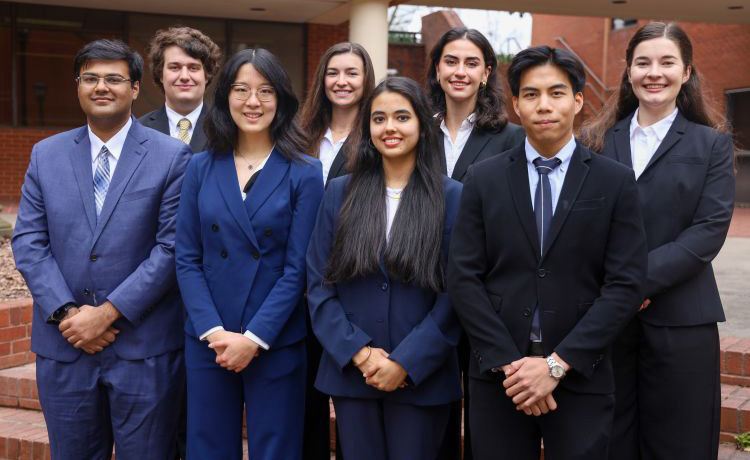
CLIENT: Arauco North America
MEMBERS: Pantach Anantapong, Meera Bharadwaj, Allison Butler, Arnav Hiray, Christine Ling, Isabella Magdusian, Emily Stone, Zachary “Miles” Young
ADVISOR: Oktay Gunluk
PROJECT: The team developed interactive methods and tools to receive, distribute, and store Arauco’s wood products from ports to warehouses. Their design involved identifying the least costly routes and shipment plans, minimizing penalty costs at ports by incorporating risk models, and allocating products to maximize warehouse capacity utilization.
AWARDED: Finalists in the Best of ISyE Senior Design Competition, Spring 2025
The Missing Ingredient
CLIENT: Neighborhood Meals on Wheels
MEMBERS: Charles Callahan, Christian Crosby, William Daly, Michael DuBose, Varen Sharma, Prat Verma, Faith Xu
ADVISOR: Oktay Gunluk
PROJECT: The team worked to equip Meals on Wheels with data-driven tools to optimize their three core planning processes: menu creation, procurement, and inventory storage. The solution improved inventory visibility, reduced waste and grocery trip frequency, and lowered costs, ultimately enabling Meals on Wheels to feed more people on a limited budget.
AWARDED: Design With Implementation and Impact Award, sponsored by KS2 Technologies, Spring 2025
HexHive
CLIENT: Hextronics
MEMBERS: Laura Castaño, Carlos Cuni Cuervo, Alexia Goodall Mata, Henriquez Orozco, Ernesto Mealla, Juan Morales, Chloé Sanoli
ADVISOR: Anton Kleywegt
PROJECT: The team helped Hextronics to scale its operations and improve the efficiency, visibility, and quality of its drone battery-swapping process. They redesigned the facility layout without incurring additional costs, planned quality control measures, and built a functional data infrastructure.
AWARDED: Design With Implementation and Impact Award, sponsored by KS2 Technologies, Spring 2025

Developing Pioneering Research Leaders
TOP GRADUATE AND DOCTORAL PROGRAMS
For the past 35 years, ISyE’s graduate program has been ranked the top program in the nation by U.S. News & World Report. These master’s degree programs offer a rigorous and comprehensive graduate education — grounded in the core disciplines of industrial engineering, operations research, statistics, and data science.
With an emphasis on both foundational methodologies and real-world applications, these programs equip students with the analytical and technical skills needed to tackle complex challenges across many industries. Supported by ISyE’s distinguished faculty, students can choose from nine distinct master’s degree options — each designed to align with diverse educational goals and career ambitions.
Additionally, ISyE’s six doctoral programs develop pioneering researchers who are ready to make a difference. With a strong foundation in methodology and focus on producing meaningful work, doctoral students lead the industrial and systems engineering field — equipped to push boundaries in academia, government, and industry.
Shaping the Future of Data-Driven Leadership
Master of Science in Analytics Reaches 10-Year Milestone, Cultivates Network of Over 7,000 Alumni Worldwide
Since its launch in 2014, ISyE’s Master of Science in Analytics (MSA) program has equipped students with the technical tools to model and analyze data and the strategic insights to solve real-world problems.
Under the leadership of Director Joel Sokol, Harold E. Smalley Professor in ISyE with a joint appointment in the College of Lifetime Learning, the MSA has developed an interdisciplinary curriculum that balances rigor with relevance — covering predictive modeling and optimization to big data infrastructure and applied AI.
“From its inception, the MSA program set itself apart by focusing on data science, machine learning, and business strategy,” said Sokol. “Our graduates not only understand the math and code behind the models but also know how to turn insights into action.”
More than 10 years since its inception, the program graduates up to 100 in-person and 1,500 online students annually and has grown into a thriving academic community of more than 7,000 alumni worldwide. Many alumni hold leadership roles in data science, engineering, operations research, and AI strategy.
ISyE offers two options for students seeking an MSA: a full-time, in-person curriculum to be completed in a single year and a self-paced, remote curriculum to be completed in two to three years.
As Sokol explained, “MSA’s fully online format has democratized access to top-tier analytics education, allowing professionals from over 150 countries to pursue the degree while remaining embedded in their industries.”
This global reach has cultivated a rich, interconnected alumni network that spans industries from healthcare to finance, sports to logistics, and technology to public policy. MSA graduates are shaping the future of data-driven leadership — wherever they are in the world.
The MSA program has been ranked as high as No. 1 in Data Analytics, No. 3 in Data Science, and No. 3 in Business Analytics. But rankings only tell part of the story.
“Our true impact lies in the world-renowned program’s unwavering commitment to innovation, applied learning, and expanding access to top-tier education,” added Sokol. “Now entering its second decade, the MSA program continues to evolve and lead — from launching new courses in ethical AI, hosting virtual global summits, or forging partnerships with leading companies.”
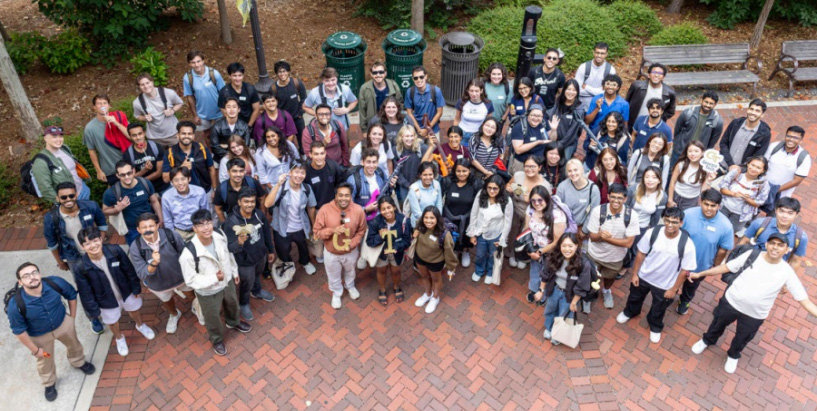
Students who enroll in the in-person Master of Science in Analytics program participate in an on-campus bootcamp at the beginning of the semester.

Investing in New Initiatives for Lifetime Learners
On the other end of its education portfolio, ISyE is investing in lifetime learning initiatives by providing courses and certificates through the Supply Chain and Logistics Institute and Center for Health and Humanitarian Systems. These units deliver short courses, certificates, and workforce development programs in areas such as supply chain engineering, logistics, health systems, and humanitarian operations, serving professionals across sectors and geographies.
These efforts are closely aligned with Georgia Tech’s recently launched College of Lifetime Learning (CLL). By offering new degree programs and workforce development opportunities, CLL is transforming the learning ecosystem to empower lifetime learners with access, options, and community.
“Higher education is going through yet another major transformation. We will continue to build on our strengths, be intentional and innovative in advancing our educational programs, empower our students with essential skills, and support lifelong learning and well-being.”
— PINAR KESKINOCAK, H. MILTON AND CAROLYN J. STEWART SCHOOL CHAIR AND PROFESSOR, ISyE
Industrial and Systems Engineering
This story originally appeared in the 2025-26 issue of the Industrial and Systems Engineering magazine.