
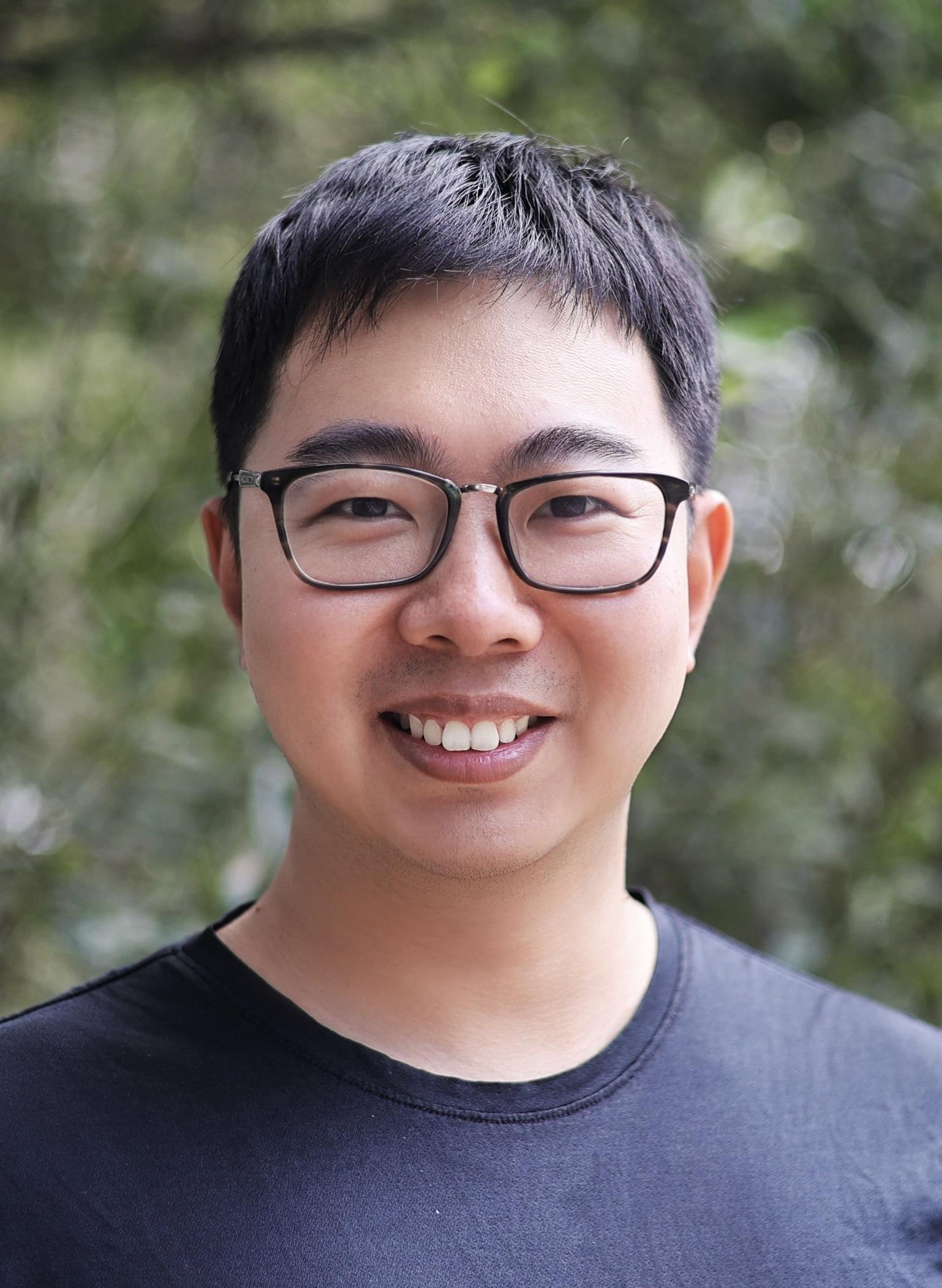
Coca-Cola Foundation Early Career Professor and
Assistant Professor


Education
- Ph.D. Mechanicial Engineering (Robotics, Control, and Optimization) (2021), University of California, Berkeley
- Postdoctoral Scholar (2021-2023), Stanford University
Expertise
- Robotics
- Embodied/Physical AI
- Agentic AI
- Trustworthy AI
- Foundation Models
- Safe Learning & Control
- Human-Robot Interaction
- Multi-Agent Systems
- Autonomous Driving
- Intelligent Transportation Systems
About
Dr. Jiachen Li is a Coca-Cola Foundation Early Career Professor and Assistant Professor in the H. Milton Stewart School of Industrial and Systems Engineering (ISyE) and the George W. Woodruff School of Mechanical Engineering (ME) at Georgia Tech. He is the Director of the Trustworthy Autonomous Systems Laboratory (TASL) and a core faculty member of the Institute for Robotics and Intelligent Machines (IRIM). Before joining Georgia Tech, he received his Ph.D. from the University of California, Berkeley (UC Berkeley), followed by a Postdoctoral Scholar appointment at Stanford University. Dr. Li was recognized as an RSS Robotics Pioneer and an ASME DSCD Rising Star. He currently serves as Co-Chair of the IEEE RAS Technical Committee on Robot Learning and as an Associate Editor or Area Chair for more than ten leading journals and conferences. He has published over 90 peer-reviewed papers and holds 14 patents worldwide. He has organized and delivered keynote talks at numerous workshops on robotics, machine learning, computer vision, and intelligent transportation systems at top international conferences. His research interests span robotics, trustworthy AI/ML, foundation models, reinforcement learning, control, optimization, and computer vision, with a particular emphasis on intelligent autonomous systems operating in human-centered and multi-agent environments.
Research
Our research aims to enable trustworthy, interactive, and human-centered autonomous embodied agents that can perceive, understand, and reason about the physical world; safely interact and collaborate with humans; and efficiently coordinate with other intelligent agents so that they can benefit society in daily life. To accomplish this goal, Prof. Jiachen Li's group has been pursuing interdisciplinary research that develops fundamental theories and practical algorithms grounded in robotics, machine learning, reinforcement learning, computer vision, control theory, and optimization, which are validated on various robotic hardware platforms such as humanoid mobile manipulators, quadrupeds, autonomous vehicles, manipulators, and drones. More information about his research and activities is available at his lab website.
Our lab is actively seeking multiple highly motivated talents to join us at Georgia Tech as Ph.D. students (fully funded, starting in Spring 2027 or Fall 2027), master’s students, undergraduate students, onsite/remote research interns, visiting scholars, or postdoctoral researchers.
Awards and Honors
- Best Paper Award, ACM MM Workshop, 2025
- Best Paper Award Finalist, RSS Workshop, 2025
- UC Regents Faculty Fellowship, 2024
- ASME Dynamic Systems & Control Division (DSCD) Rising Star, 2023
- Robotics: Science and Systems (RSS) Pioneer Award, 2022
- Best Paper Award Runner-Up, ICCV Workshop, 2021
- ICML Top Reviewer Award, 2020
Representative Publications
Please check the TASL website and Prof. Jiachen Li's Google Scholar for our latest featured research topics and publications!
[1] Z. Wang, H. Jiang, S. Dong, Y. Wang, H. Qiu, and J. Li, “Drive My Way: Preference Alignment of Vision-Language-Action Model for Personalized Driving”, IEEE/CVF Conference on Computer Vision and Pattern Recognition (CVPR), 2026.
[2] S. Gong*, J. Yao*, J. Wang, M. Pavone, and J. Li, “Navigating the Proximity-Safety Balance: Constraint Decomposition for Human Following in Pedestrian Crowds”, IEEE/RSJ International Conference on Intelligent Robots and Systems (IROS), 2026.
[3] Y. Chaudhary, H. Jiang, Y. Wang, R. Sharma, M. Mehta, L. Sun, Z. Fan, Z. Tu, and J. Li, “NavTrust: Benchmarking Trustworthiness for Embodied Navigation”, submitted to IEEE/RSJ International Conference on Intelligent Robots and Systems (IROS), 2026.
[4] X. Zhang*, Z. Wang*, Z. Li, J. Yao, and J. Li, “CommCP: Efficient Multi-Agent Coordination via LLM-Based Communication with Conformal Prediction”, IEEE International Conference on Robotics and Automation (ICRA), 2026.
[5] Z. Wang*, Y. Wang*, Z. Wu*, H. Ma, Z. Li, H. Qiu, and J. Li, “CMP: Cooperative Motion Prediction with Multi-Agent Communication”, IEEE Robotics and Automation Letters (RA-L), 2025.
[6] M. Yan, Y. Wang, Z. Liu, and J. Li, “RDD: Retrieval-Based Demonstration Decomposer for Planner Alignment in Long-Horizon Tasks”, Advances in Neural Information Processing Systems (NeurIPS), 2025.
[7] J. Yao, X. Zhang, Y. Xia, Z. Wang, A. K. Roy-Chowdhury, and J. Li, “Towards Generalizable Safety in Crowd Navigation via Conformal Uncertainty Handling”, Conference on Robot Learning (CoRL), 2025.
[8] Y. Wang, X. Huang, X. Sun, M. Yan, S. Xing, Z. Tu, and J. Li, “UniOcc: A Unified Benchmark for Occupancy Forecasting and Prediction in Autonomous Driving”, IEEE International Conference on Computer Vision (ICCV), 2025.
[9] X. Zhang*, H. Qin*, F. Wang, Y. Dong, and J. Li, “LaMMA-P: Generalizable Multi-Agent Long-Horizon Task Allocation and Planning with LM-Driven PDDL Planner”, IEEE International Conference on Robotics and Automation (ICRA), 2025.
[10] B. Lange, M. Itkina, J. Li, and M. J. Kochenderfer, “Self-supervised Multi-future Occupancy Forecasting for Autonomous Driving”, Robotics: Science and Systems (RSS), 2025.
[11] H. Kim, K. Lee, J. Park, J. Li, and J. Park, “Human Implicit Preference-Based Policy Fine-tuning for Multi-Agent Reinforcement Learning in USV Swarm”, IEEE/RSJ International Conference on Intelligent Robots and Systems (IROS), 2025.
[12] J. Li, D. Isele, K. Lee, J. Park, K. Fujimura, and M. J. Kochenderfer, “Interactive Autonomous Navigation with Internal State Inference and Interactivity Estimation”, IEEE Transactions on Robotics (T-RO), 2024.
[13] J. Li, J. Li, S. Bae, and D. Isele, “Adaptive Prediction Ensemble: Improving Out-of-Distribution Generalization of Motion Forecasting”, IEEE Robotics and Automation Letters (RA-L), 2024.
[14] J. Li, X. Shi*, F. Chen*, J. Stroud*, Z. Zhang, T. Lan, J. Mao, J. Kang, K. Refaat, W. Yang, E. Le, and C. Li, “Pedestrian Crossing Action Recognition and Trajectory Prediction with 3D Human Keypoints”, IEEE International Conference on Robotics and Automation (ICRA), 2023.
[15] J. Li, F. Yang, H. Ma, S. Malla, M. Tomizuka and C. Choi, “RAIN: Reinforced Hybrid Attention Inference Network for Motion Forecasting”, in International Conference on Computer Vision (ICCV), 2021.
[16] J. Li*, F. Yang*, M. Tomizuka and C. Choi, “EvolveGraph: Multi-Agent Trajectory Prediction with Dynamic Relational Reasoning”, in Advances in Neural Information Processing Systems (NeurIPS), 2020.