
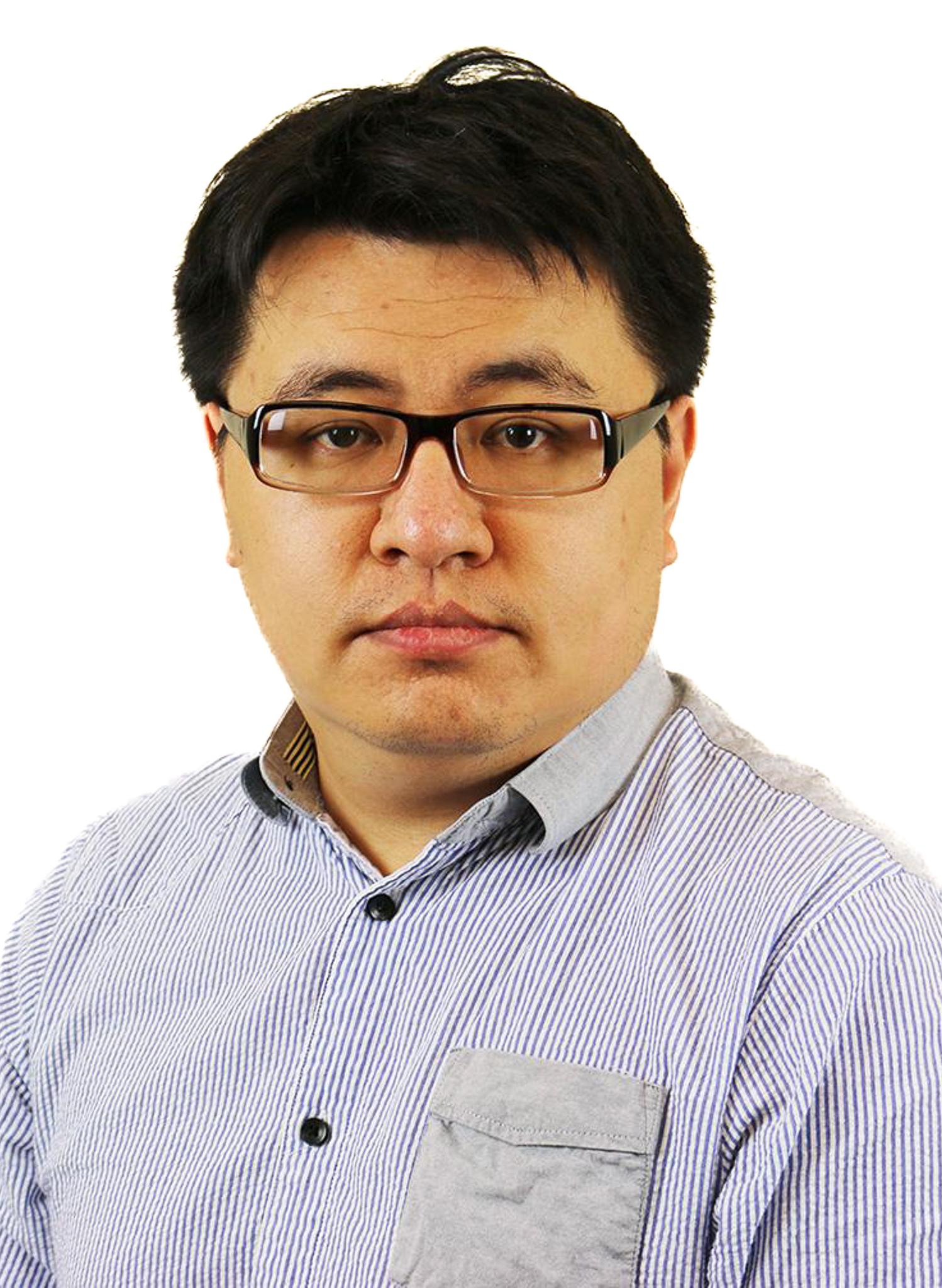
Associate Professor

Education
- Ph.D. Computer Science , Johns Hopkins University
- M.S. Applied Math , University of Minnesota
- B.S./M.S. Computer Science , Harbin Institute of Technology
About
Tuo Zhao is an associate professor in the H. Milton Stewart School of Industrial and Systems Engineering and the school of Computational Science and Engineering (By Courtesy) at Georgia Tech.
His research focuses on developing principled methodologies and algorithms for large language models. He is also actively working on deep learning theory and open source software development for scientific data analysis.
Tuo Zhao received his Ph.D. degree in Computer Science at Johns Hopkins University. He was a visiting scholar in the Department of Biostatistics at Johns Hopkins Bloomberg School of Public Health, and the Department of Operations Research and Financial Engineering at Princeton University.
He was the core member of the JHU team winning the INDI ADHD 200 global competition on fMRI imaging-based diagnosis classification. He received the Siebel scholarship, the Baidu Fellowship and Google Faculty Research Award. He was the co-recipient of the ASA Best Student Paper Award on Statistical Computing and the 2016 INFORMS SAS Best Paper Award on Data Mining.
Research
My research develops the mathematical and computational foundations for making AI systems more efficient, reliable, and aligned with human values. As large language models become central to modern life — powering tools used in healthcare, education, business, and scientific discovery — ensuring that these systems are affordable to build, safe to deploy, and trustworthy in their behavior has become one of the most pressing challenges in computer science.
My work addresses this challenge from two angles. First, I develop methods that dramatically reduce the computational cost of training and adapting large AI models, making advanced AI accessible beyond a handful of well-resourced organizations. Second, I study how to make AI systems behave reliably and follow human intent accurately, reducing the risk of harmful or misleading outputs. Both efforts are grounded in rigorous mathematical analysis, which not only explains why modern AI training works but also guides the design of better algorithms — principles that my group develops in close collaboration with industry partners and translates into real-world impact at scale.
Teaching
My teaching mission is to prepare the next generation of scientists and engineers to tackle the most pressing challenges in artificial intelligence. At Georgia Tech, I teach courses ranging from introductory machine learning to advanced topics in deep learning, serving students from diverse backgrounds across engineering, mathematics, and computer science. I believe that a strong education in AI must combine mathematical rigor with hands-on experience — students who understand both the theory behind algorithms and how to apply them are far better equipped to innovate responsibly in a rapidly changing field.
Beyond the classroom, I mentor doctoral students who go on to careers at leading universities, research laboratories, and technology companies. Watching students develop from learners into independent researchers — and ultimately contribute their own ideas to the field — is the most rewarding part of my work as an educator. I am committed to building an inclusive and intellectually rigorous training environment where students from all backgrounds can thrive and make meaningful contributions to science and society.
Awards and Honors
- Finalist, Efficient Natural Language and Speech Processing (ENLSP) Workshop at NeurIPS 2024
- Finalist, Best Student Paper Competition, International Microwave Symposium (IMS) 2021
- Google Faculty Research Award 2020
- INFORMS Best Paper Award on Data Mining 2016
- ASA Best Student Paper Award on Statistical Computing 2016
- Winner of INDI ADHD-200 Global Competition 2011
Representative Publications
LoftQ: LoRA-Fine-Tuning-Aware Quantization for Large Language Models Y. Li, Y. Yu, C. Liang, P. He, N. Karampatziakis, W. Chen and T. Zhao International Conference on Learning Representations (ICLR), 2024
AdaLoRA: Adaptive Budget Allocation for Parameter-Efficient Fine-Tuning Q. Zhang, M. Chen, A. Bukharin, N. Karampatziakis, P. He, Y. Cheng, W. Chen and T. Zhao International Conference on Learning Representations (ICLR), 2023
Score Approximation, Estimation and Distribution Recovery of Diffusion Models on Low-Dimensional Data M. Chen, K. Huang, T. Zhao and M. Wang International Conference on Machine Learning (ICML), 2023
Transformer Hawkes Process S. Zuo, H. Jiang, Z. Li, T. Zhao and H. Zha International Conference on Machine Learning (ICML), 2020
SMART: Robust and Efficient Fine-Tuning for Pre-trained Natural Language Models through Principled Regularized Optimization H. Jiang, P. He, W. Chen, X. Liu, J. Gao and T. Zhao Annual Meeting of the Association for Computational Linguistics (ACL), 2020
Efficient Approximation of Deep ReLU Networks for Functions on Low-Dimensional Manifolds M. Chen, H. Jiang, W. Liao and T. Zhao Conference on Neural Information Processing Systems (NeurIPS), 2019