
Allen-Davidson-Coleman XR Makerspace
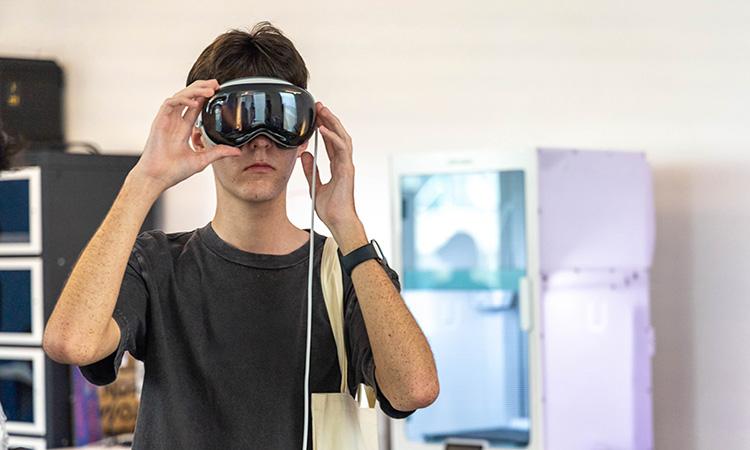
The Allen–Davidson–Coleman XR Makerspace at the H. Milton Stewart School of Industrial and Systems Engineering empowers students and faculty across Georgia Tech to explore, design, and innovate with immersive technologies by providing open access to cutting-edge XR equipment, high-performance computing, motion capture, 3D scanning, and fabrication tools. Our mission is to foster hands-on learning, interdisciplinary collaboration, and human-centered systems engineering research by supporting independent experimentation, course projects, and faculty-driven initiatives that advance how XR technologies enhance engineering practice, education, and real-world problem solving.

Center for Statistical Science
The Stewart School of Industrial & Systems Engineering and the School of Mathematics have joined forces to form the Center for Statistical Science at Georgia Tech. The focus of this interdisciplinary center is to leverage knowledge and resources to extend Georgia Tech’s reach in research and teaching. The Center was established to be the home of statistical work at Georgia Tech.

Health Analytics
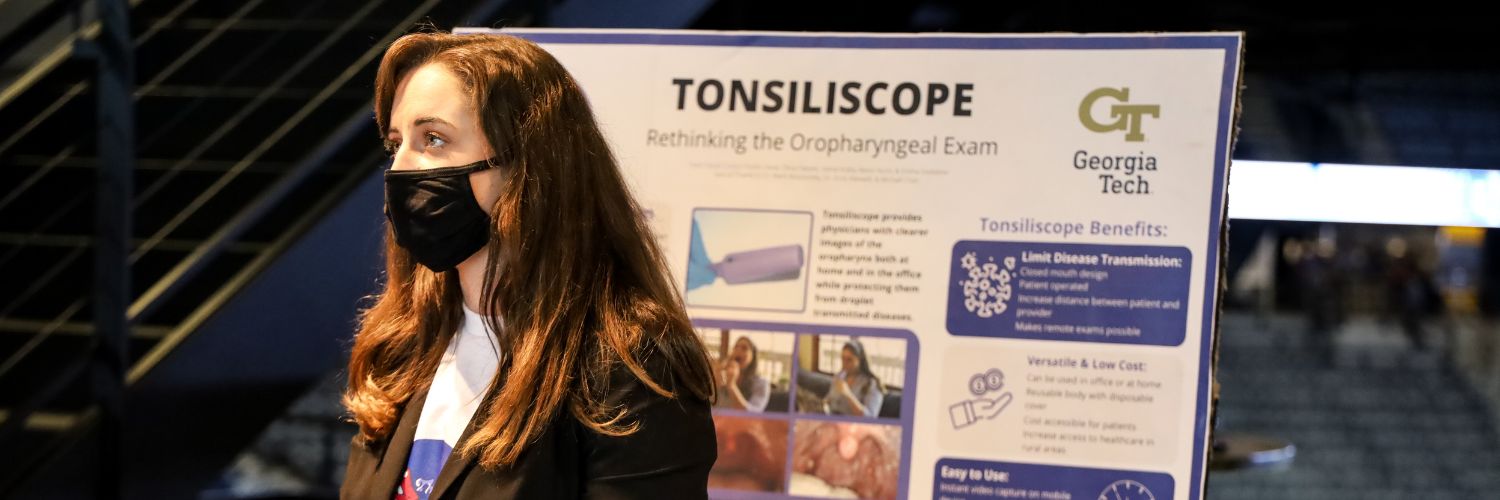
The Health Analytics group at Georgia Tech conducts research and mentors students in data science methodologies to improve decision-making in health care delivery and public health. Approaches are based on rigorous modeling, mathematical standards, and advanced computing techniques and are anchored in real problems and questions in the health domain. The team collaborates with scientists and decision-makers from many types of organizations including clinicians, large providers, public health entities, and private companies.
Physical Internet Center
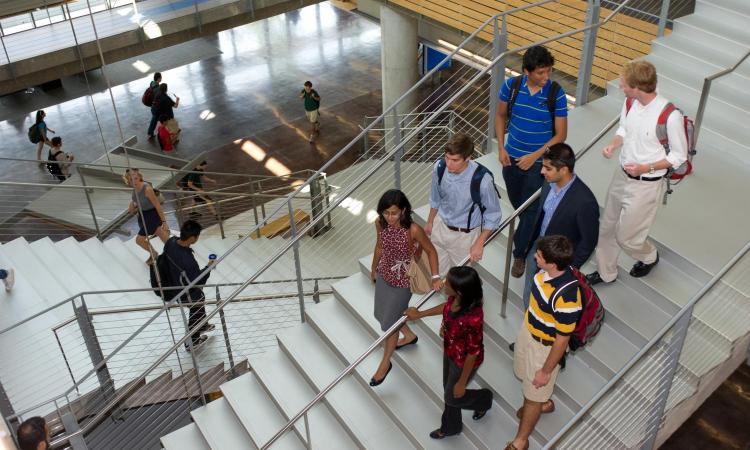
The Physical Internet Initiative aims at transforming the way physical objects are moved, stored, realized, supplied, and used, pursuing global logistics efficiency and sustainability. Originating from Professor Benoit Montreuil in 2006, this ground-breaking vision, revolutionizing current paradigms, has stirred great interest from scientific, industrial as well as governmental communities.

Predictive Analytics and Intelligent Systems (PAIS)
Research at PAIS focuses on developing methodologies and algorithms aimed at advancing predictive analytics and decision-making under uncertainty in applications spanning traditional manufacturing, service, and energy sectors to unique and unconventional application domains, such as space services and deep space exploration.
Sentient Immersive Response Network Lab
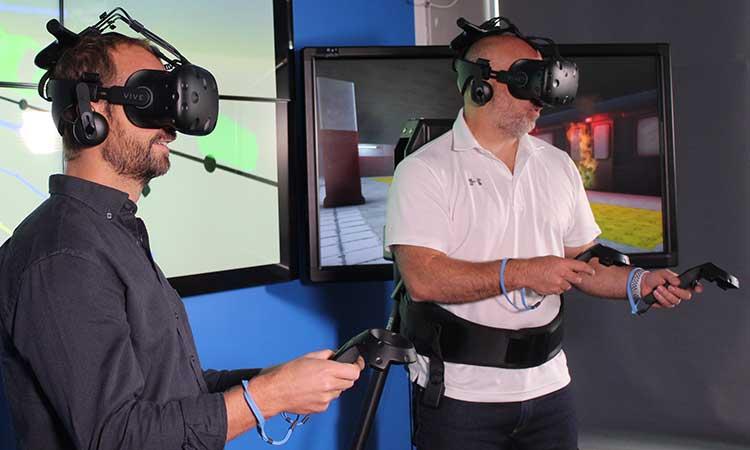
The SIReN Lab is a collaboration of IMT Mines Albi and Georgia Tech in the field of artificial intelligence (AI) and its interface with immersive technologies. The objective of the research is to use virtual reality to reproduce prospective situations and thus facilitate the readability of AI information by humans to help them in their decision-making.
Socially Aware Mobility
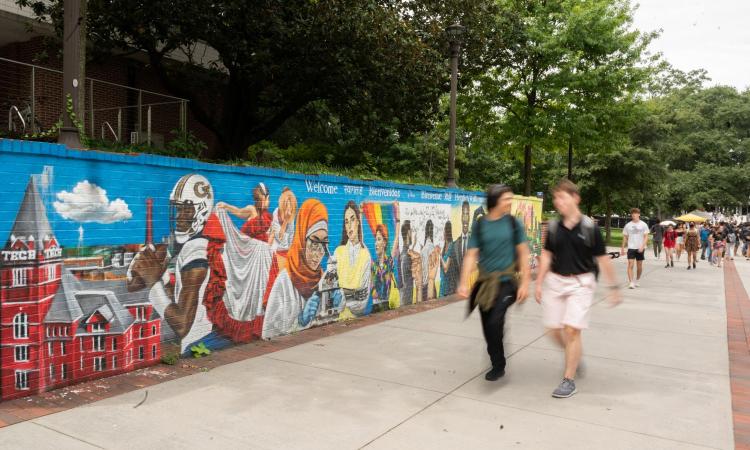
The Socially Aware Mobility project is poised to have a tremendous impact on the metro Atlanta area, revolutionizing and modernizing the transit system for the 21st century. Funded in part by a grant from the National Science Foundation, the project aims to bring equitable accessibility, decrease congestion, and increase mobility to all users of the transportation system.
Symbiotic and Augmented Intelligence Laboratory (SAIL)
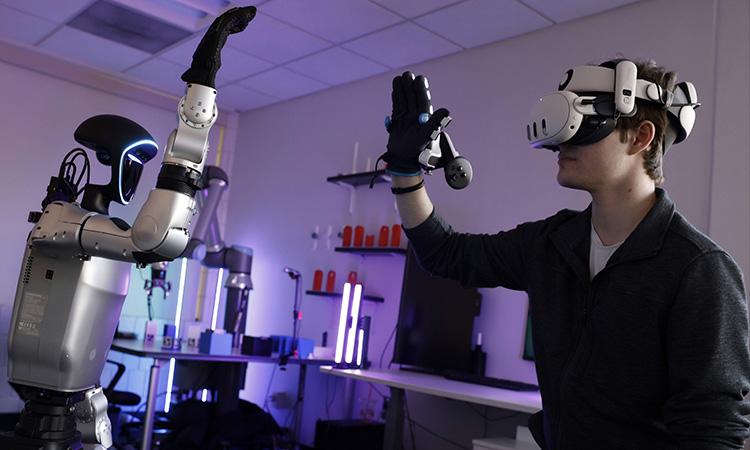
The Symbiotic and Augmented Intelligence Laboratory is advancing the future of human and intelligent machine collaboration. Through innovations in AI, robotics, and XR, we develop technologies that enhance human capabilities, support better decisions, and create new possibilities for work and learning. Our research keeps people at the center of innovation, ensuring technology amplifies human potential rather than replaces it.
Trustworthy Autonomous Systems Laboratory (TASL)
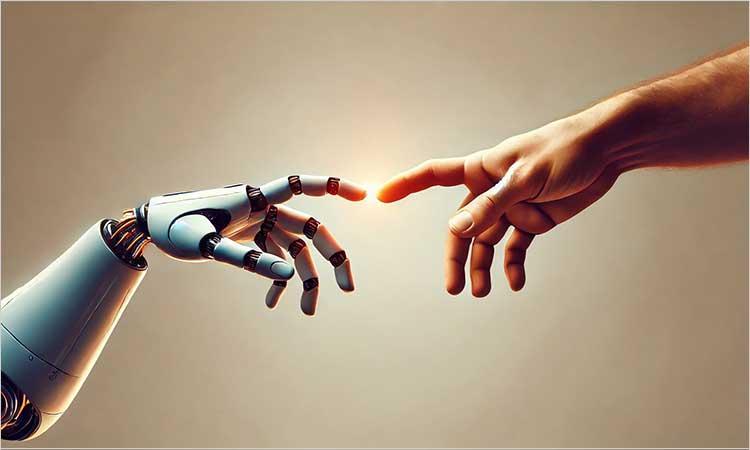
TASL aims to enable trustworthy, interactive, and human-centered autonomous embodied agents that can perceive, understand, and reason about the physical world; safely interact and collaborate with humans; and efficiently coordinate with other intelligent agents to benefit society in everyday life. The team pursues interdisciplinary research that develops fundamental theories and practical algorithms grounded in robotics, machine learning, reinforcement learning, computer vision, control theory, and optimization, with real-world validation across a wide range of robotic hardware platforms.