
Quantum Wavelet Shrinkage: From Qubits to Attenuation Channels
Abstract: Wavelet shrinkage is a standard method for removing noise from signals. A wavelet transform often concentrates the signal in a small number of coefficients, which makes it possible to reduce noise by thresholding or attenuating the empirical coefficients. How can we implement a nonlinear, generally noninvertible shrinkage rule when quantum gates are unitary?
The talk begins with an introduction to qubits, circuits, measurement, and Qiskit simulation. It then explains the connection between the Haar transform and the Hadamard gate and shows how orthogonal wavelet transforms act on amplitude-encoded data. The main construction uses attenuation factors from Bayesian Adaptive Multiresolution Shrinkage (BAMS) to define a quantum channel in the wavelet basis. Conditioning on one outcome of an auxiliary qubit recovers the classical BAMS-shrunken coefficients up to normalization. The talk will explain which results are exact, what has been demonstrated in simulation, and what remains open for implementation on quantum hardware.
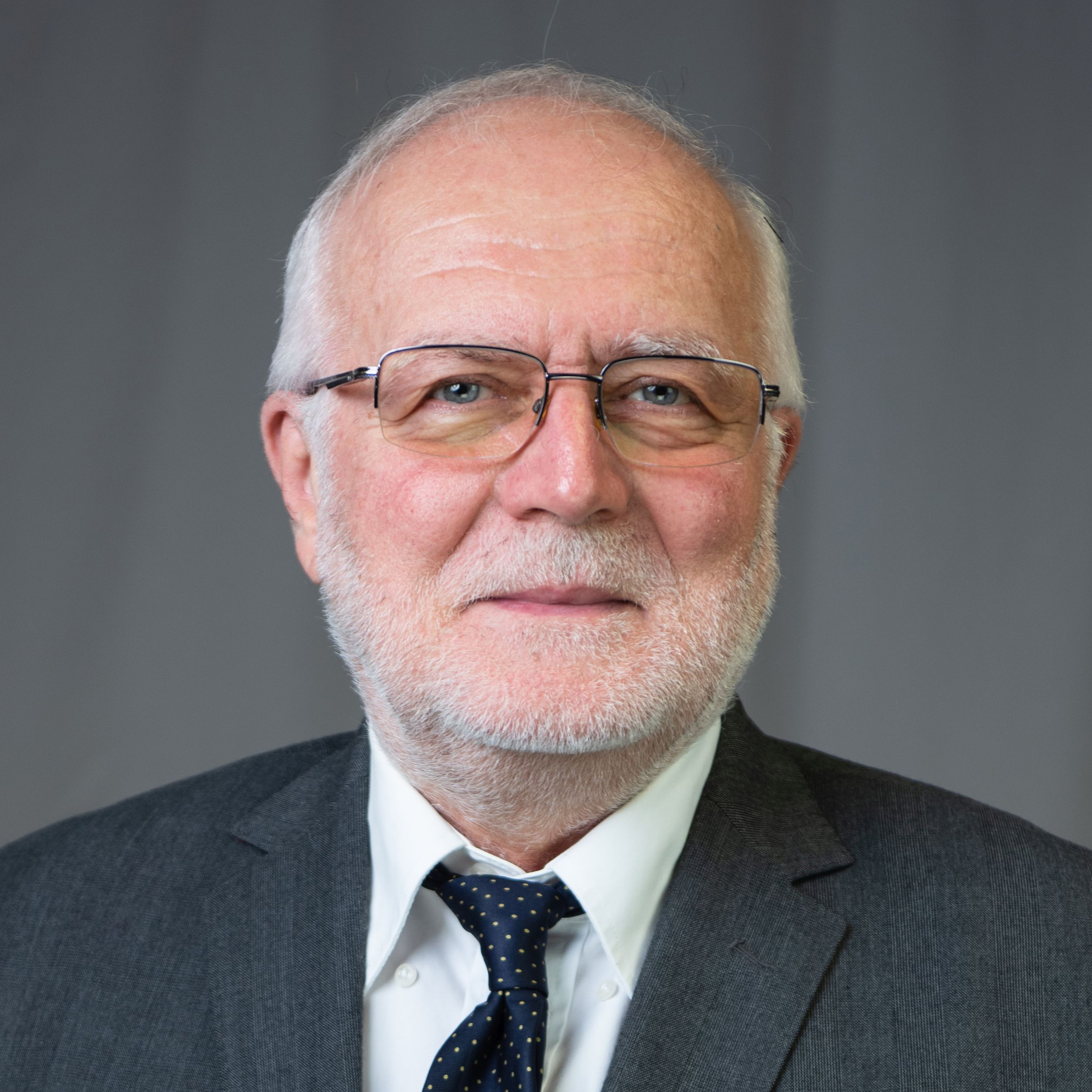
Bio: Brani Vidakovic is Professor and H.O. Hartley Chair in Statistics at Texas A&M University. He received his Ph.D. in Statistics from Purdue University. His research interests include wavelets, multiscale statistical modeling, Bayesian methods, and quantum information.