
Let’s say you ask ChatGPT a question that stumps it, or a Waymo vehicle encounters something unusual in the road, or an autonomous factory faces an unexpected disruption.
Most people would recognize that something unexpected has happened and adjust accordingly. For machines, it’s not always that simple.
Researchers at Georgia Tech’s H. Milton Stewart School of Industrial and Systems Engineering (ISyE) are addressing this very challenge: how can autonomous systems recognize when something unexpected has happened, determine whether it matters, and decide how to respond?
In a recent paper published in the INFORMS Journal on Data Science, the research team introduced a new framework called Mutual Information Surprise, designed to help machines identify meaningful surprises in complex environments. The work could help lay the foundation for AI agents, robots, and autonomous systems that can better navigate unexpected situations, avoid costly mistakes, and make more informed decisions when faced with situations they weren’t designed or trained to handle.
"Traditional automation systems are designed to follow instructions. They do not have a sense of surprise. Machines follow a predetermined recipe and produce the expected result," said Yu Ding, the Anderson-Interface Chair and professor in ISyE, who is leading this project. " Intelligent agents, however, must do more than simply follow instructions. They need to recognize when their current understanding or reasoning process has become inadequate. Humans routinely use surprise for this purpose. An autonomous machine needs an analogous computational capability."
This research concept was jointly worked out by Xiao Liu, the David M. McKenney Family Associate Professor, as well as a former postdoctoral fellow in ISyE, Yinsong Wang, and Ph.D. student Quan Zeng.
While several methods already exist to measure surprise in machines, such as the "Shannon Surprise" and "Bayesian Surprise," the ISyE team saw limitations in both approaches.
Shannon Surprise tends to focus on the rarity of an event, while Bayesian Surprise focuses on how much a new observation changes a system's beliefs.
To illustrate the limitations of existing surprise measures, Ding pointed to the examples of someone noticing a specific type of car parked nearby or a student who consistently earns top grades but suddenly performs poorly on an exam.
Existing surprise measures don't always flag the right kinds of moments to be surprised, Ding said. To the examples given, the Shannon Surprise would flag the specific car parked nearby, although people typically wouldn’t be surprised by that event. Conversely, people would be surprised by the student performing poorly, but the Bayesian Surprise would not flag it.
"We introduce this new surprise definition because it measures the gain of knowledge and epistemic progression, thus capturing the right moments when a system should be surprised and ignoring the moments when it shouldn't," Ding added.
The framework could eventually help systems determine when to continue as planned or when to stop and reassess, whether that's an AI assistant struggling to answer a question, a robot encountering a situation it has never seen before, or an autonomous factory detecting a disruption that could affect production and require human intervention.
Looking ahead, the ISyE research team is exploring potential applications in engineering autonomous systems and is developing a proposal for federally funded programs.
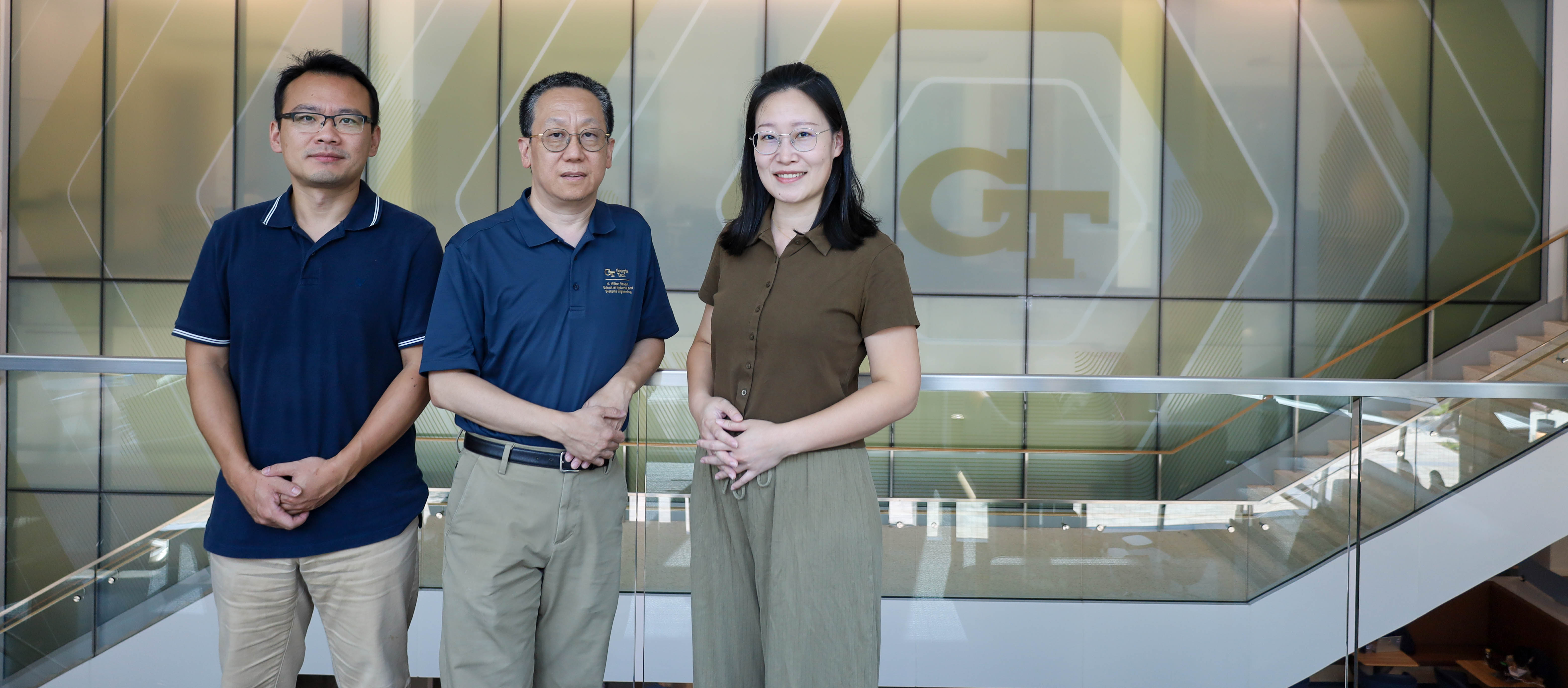
The ISyE research team from left to right: Xiao Liu, the David M. McKenney Family Associate Professor; Yu Ding, the Anderson-Interface Chair and professor and project lead; and Ph.D. student Quan Zeng.
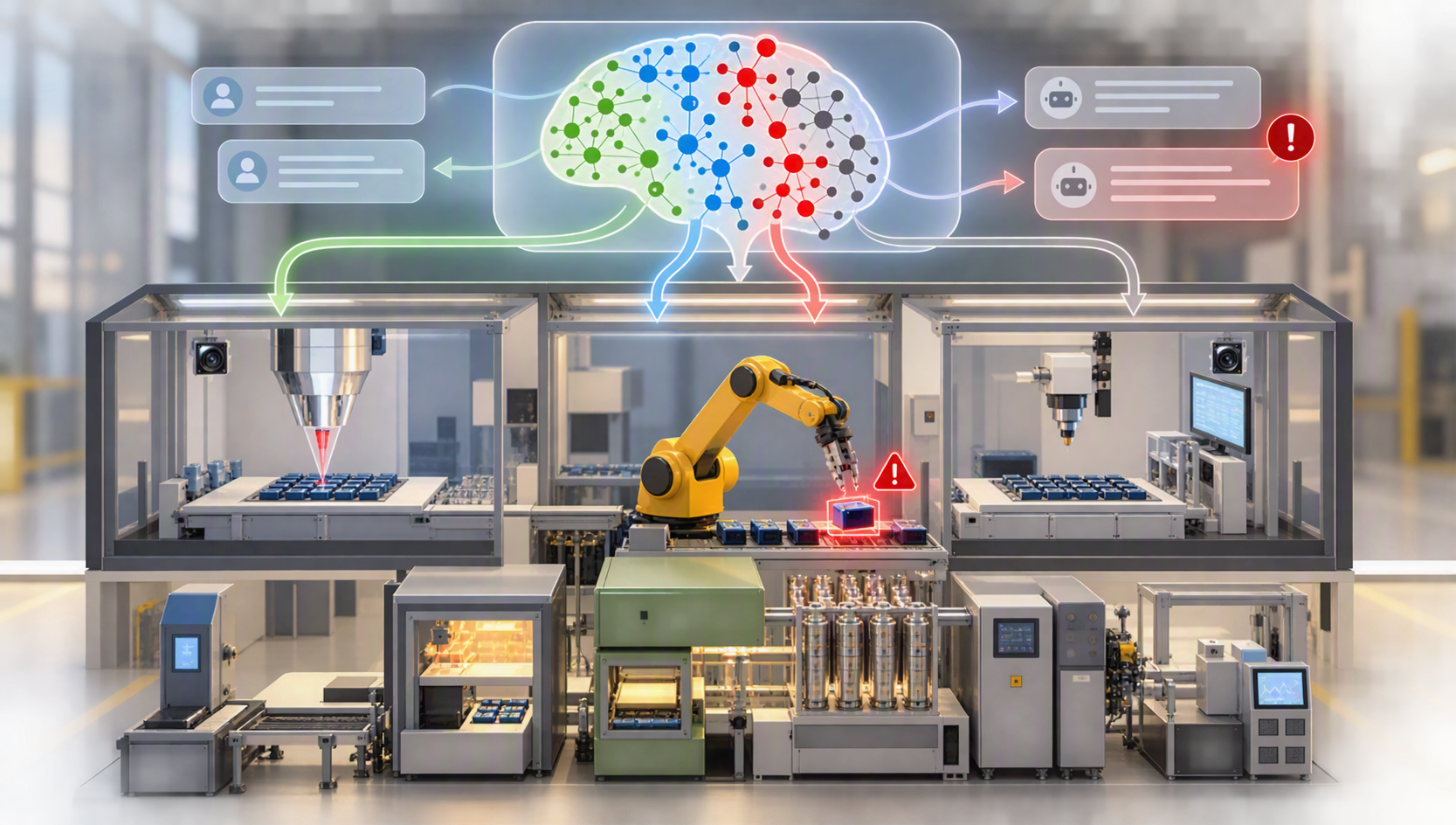
ISyE researchers contributed to the development of a new framework called Mutual Information Surprise to help autonomous systems recognize and respond to meaningful unexpected events in complex environments.
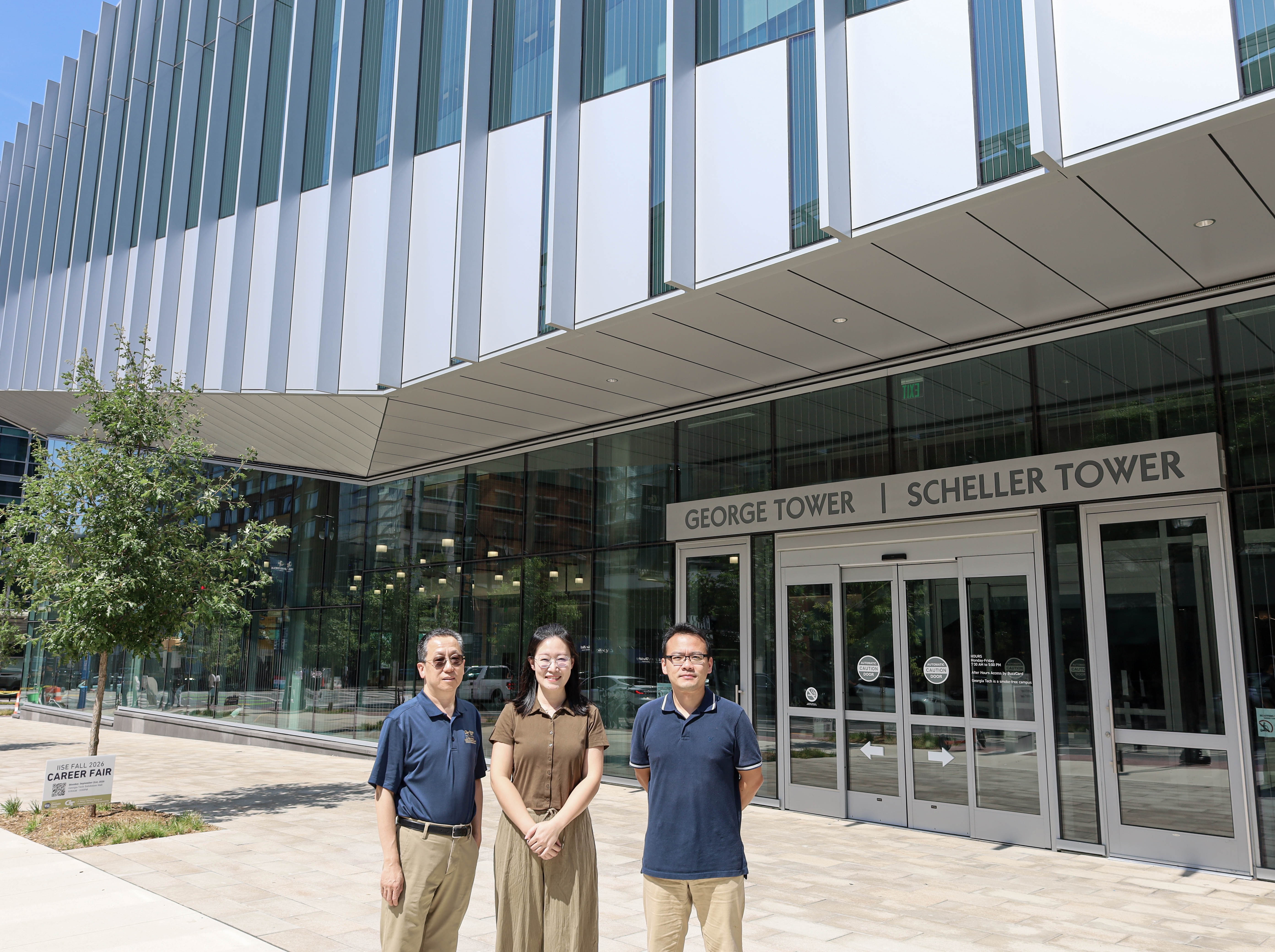
The research team stands outside of George Tower, ISyE's new home in Tech Square.
For More Information Contact
Anna Akins, Communications Manager I
Researcher photos taken by Medha Gollakoti, ISyE student assistant.
AI illustration created using Microsoft Copilot.