
Title:
Generative AI for Global Social Impact: Towards Solving the Deployment Bottleneck
Abstract:
My team’s work on AI for Social Impact (AI4SI) has spanned two decades, focusing on optimizing limited resources in critical areas like public health, conservation, and public safety. I will present field results from India, where the deployment of restless and collaborative multi-armed bandit (RMAB) algorithms achieved significant improvements in the world’s two largest mobile maternal health programs. I will also highlight ongoing work on network-based HIV prevention in South Africa, modeled as a branching bandit problem. These projects, along with other initiatives across Africa and Asia, expose a critical "deployment bottleneck" that spans the entire machine learning pipeline. This bottleneck consists of three key hurdles: the observational scarcity gap (data), the policy synthesis gap (learning and modeling), and the human-AI alignment gap (deployment).
This talk investigates how Generative AI can address this AI4SI deployment bottleneck through the strategic use of LLM Agents and diffusion models. I will demonstrate how LLM Agents address the alignment gap by integrating expert guidance into algorithmic planning, ensuring resource optimization strategies reflect real-world priorities. Furthermore, I will show how diffusion models mitigate the scarcity and synthesis gaps by generating synthetic social networks and facilitating Transfer RL to utilize data across domains. I will conclude by discussing this path toward a more scalable, human-aligned future for AI for Social Impact.
Bio:
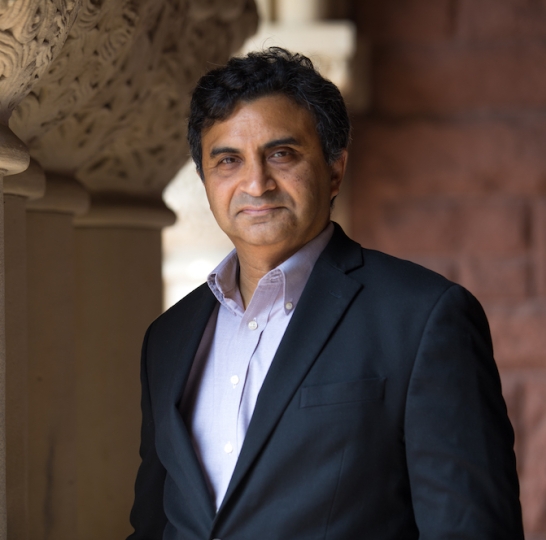
Milind Tambe is the Gordon McKay Professor of Computer Science at Harvard University; concurrently, he is Principal Scientist and Director for “AI for Social Good” at Google Research. Prof. Tambe and his team have developed innovative AI and multi-agent reasoning systems that have been successfully deployed to deliver real-world impact in public health (e.g., maternal and child health), public safety, and wildlife conservation. He is the recipient of the AAAI Award for Artificial Intelligence for the Benefit of Humanity, the AAAI Feigenbaum Prize, the IJCAI John McCarthy Award, the AAAI Robert S. Engelmore Memorial Lecture Award, and the AAMAS ACM/SIGAI Autonomous Agents Research Award. He is a fellow of AAAI and ACM. His contributions in Operations Research and public safety have also been recognized with the INFORMS Wagner Prize for excellence in Operations Research practice, Military Operations Research Society Rist Prize, the Columbus Fellowship Foundation Homeland security award, and commendations and certificates of appreciation from the US Coast Guard, the Federal Air Marshals Service, and airport police at the city of Los Angeles.