
Thirty-two senior design teams from the H. Milton Stewart School of Industrial and Systems Engineering, representing the largest cohort ever in a single semester, presented their capstone project at the Capstone Design Expo on April 28. These projects finalized years of undergraduate study in industrial engineering and mark the final milestone for students as they prepare to graduate from the school.
Working in teams of six to eight, students are responsible for identifying industry clients and spending the semester developing data-driven solutions. This semester, teams collaborated with organizations such as American Airlines and Wellstar Health Systems to address pressing logistical, procedural, and forecasting challenges, delivering analyses and recommendations designed to drive measurable improvements.
While most teams work with external partners, several this semester chose to assist clients across Georgia Tech’s campus. Like many complex organizations, the Institute encompasses dozens of divisions and departments that work to improve their processes in support of its broader educational mission. This semester, three teams focused their capstone work on strengthening operational functions across the Institute to deliver solutions designed to create lasting impact.
Advising Designed with Students in Mind (Team Lean on Me)
Team Lean on Me worked with Academic Success & Advising to improve the current advising system for students across campus. Team members Ansley Nguyen, Josh Raug, Julianne Latimer, Noah Koh, Shivani Murugapiran, Surya Rangaswamy, Thien-An (Amy) Dang, and Wyatt Stephens wanted to make the current advising system more proactive so that advisors can connect with students who have expressed interest in specific advising goals, such as major exploration or pre-graduate advising.
Using anonymized data from the current advising platform, Navigate360, the team implemented various tools they had learned as undergraduate students. They forecast advising demand to help advisors better understand when they need to have advising opportunities available and when they should reach out to students who are not normally involved in the advising program. The team also used simulation and optimization techniques to understand how to schedule and plan advisors’ time to better meet students’ needs.
They also developed an AI chatbot that can respond to basic student inquiries, giving advisors more time to either proactively reach out to students or take more exploratory appointments. They predict that chatbots will save 603 advising hours in basic inquiry appointments per semester.
Their process also included getting feedback from current students about how advising is working for them and learning more about how the Institute operates, a unique lesson that goes beyond what students can learn in a classroom.
“Being on a very student-facing side has allowed us to learn a lot of perspectives. I've gone through four years at Georgia Tech not really knowing that much about the School of Architecture, or Aerospace, …but being on the side of surveying people, tabling, hearing from students themselves, what they want has really informed me about what our school has been like in ways that I would have never been exposed to otherwise,” Dang said.
In all, they expect their innovations to double the percentage of students captured by the advising system from 4.3 percent to about 8.6 percent while only increasing advisor workload by 3.2 percent, giving more students the opportunity to explore their futures with an advisor.
First-Year Registration, Re-imagined (Team FASET Your SEATbelts)
Team FASET Your SEATbelts worked with Georgia Tech’s Registrar’s Office to improve how first-year students register for classes during FASET — the Institute’s student orientation program. A key focus of the program was reducing the number of students who leave FASET unable to register for a full-time course load of 12 credit hours.
As former incoming students themselves, team members Alexis Almeida, Claire Wu, Irene Chang, Madeline Sanders, Mahathi Manikandan, Shaan Patel, Zach Thomas, and Zarah Khan were keenly aware of the challenges students can face when registering for classes for the first time. Failing to register for enough credit hours or enroll in the correct classes can jeopardize scholarships and, in some cases, delay graduation.
The Registrar’s Office was able to provide them with detailed data about registration, including student schedules immediately after their FASET registration, final schedules after Phase II registration, selected major, and incoming AP credits. The team also has access to the types of students who will attend each FASET session.
Using this data, they created a demand model to predict how many seats students will seek in a given class on a given FASET day, based on the number of different types of students attending that day. This information will assist managers in the Registrar’s Office in deciding how many seats to allocate to which classes for each FASET session and in ensuring that students find the classes they need on the day.
Like any project, the team encountered challenges along the way. Team member Madeline Sanders explained that she didn’t feel they were leveraging each member’s strengths, but a recent shift in approach led to better collaboration and results. After overcoming their challenges and taking on new experiences, she said she gained important lessons from her work this semester.
“I feel that out of all the projects I've done at Georgia Tech, this has taught me the most. I think I’ve learned a lot about working with a team and also working with a client because we have a lot of different stakeholders,” Sanders said.
Their solution incorporated the dynamic release of seats in Freshman courses and improved scheduling around AP test score results. They simulated their new process to estimate how it will impact students if implemented this coming summer. Using the allocations that FASET Your SEATbelts suggested decreased the number of students who left their FASET session without registering for 12 credit hours from 33 percent to 7 percent. The spread between the most successful and least successful FASET sessions in registering for 12 credit hours dropped by 36 percentage points in their simulation, indicating that their allocation would be fairer for students regardless of when their FASET session is scheduled.
Engineering a Better Game Day Experience (Team Linebackers)
At Georgia Tech, innovation on the football field doesn’t stop during the off-season. The Linebackers team — Carson Veal, Harrison Preston, Jedidiah (J.D.) Cheng, Julian Varga, Lauren McDonald, Sophia Hawkins, Wade Chappell, and William Wyatt — worked with the Georgia Tech Athletic Association to improve the function of the Yellow Jackets’ Bobby Dodd Stadium on game day. Their project tackled three critical areas that shape the fan experience, such as stadium ingress and concessions.
When large numbers of fans arrive at the same time, long entry lines can form, which not only diminishes the fan experience and, if left unmanaged, raising safety concerns. To address these ingress challenges, the team analyzed ticket-scanning data to reassess where staffing and resources could be more effectively allocated to keep the lines moving.
One bottleneck they identified was slowdowns caused by scanning individual mobile tickets. To increase throughput, the team is looking into ways that would allow a single scan of a group of tickets purchased together, streamlining entry while maintaining security. They expect this one change to reduce the time that entrants have to wait from 19 minutes to 9 minutes during peak times.
Concessions are an integral part of the game-day experience, and fans expect to find their favorite items in stock when they look for refreshments or food. Linebackers had access to concession purchase data, which they used to track where guests went when they wanted certain types of refreshments.
They used this data to determine when stands ran out of items and which stands were most successful, to improve the restocking schedule. Based on simulations, their improved restocking schedule decreased the maximum wait time for concessions by 4 minutes and reduced stockouts by 94 percent.
Throughout the project, they relied on the methods they were taught in class to analyze the current system and suggest improvements. They developed forecasting models to predict concession demand, optimization models to recommend resource allocation for ticketing, and a simulation model during the initial phases of their parking design.
As football fans themselves, they said they found it rewarding to work on a project that improved the experience for fellow fans, and they also found career growth along the way.
“[We learned] to deal with incomplete data, to figure out how to find recommendations, and how to work with that data or missing data. And how to adapt to change and pivot from one solution that you thought would be great. And then realizing as you get further along that that's just not feasible,” McDonald said. “You don't have everything laid out for you perfectly. And I think those are two of the bigger soft skills we've learned from this project. That we would definitely take to our careers.”
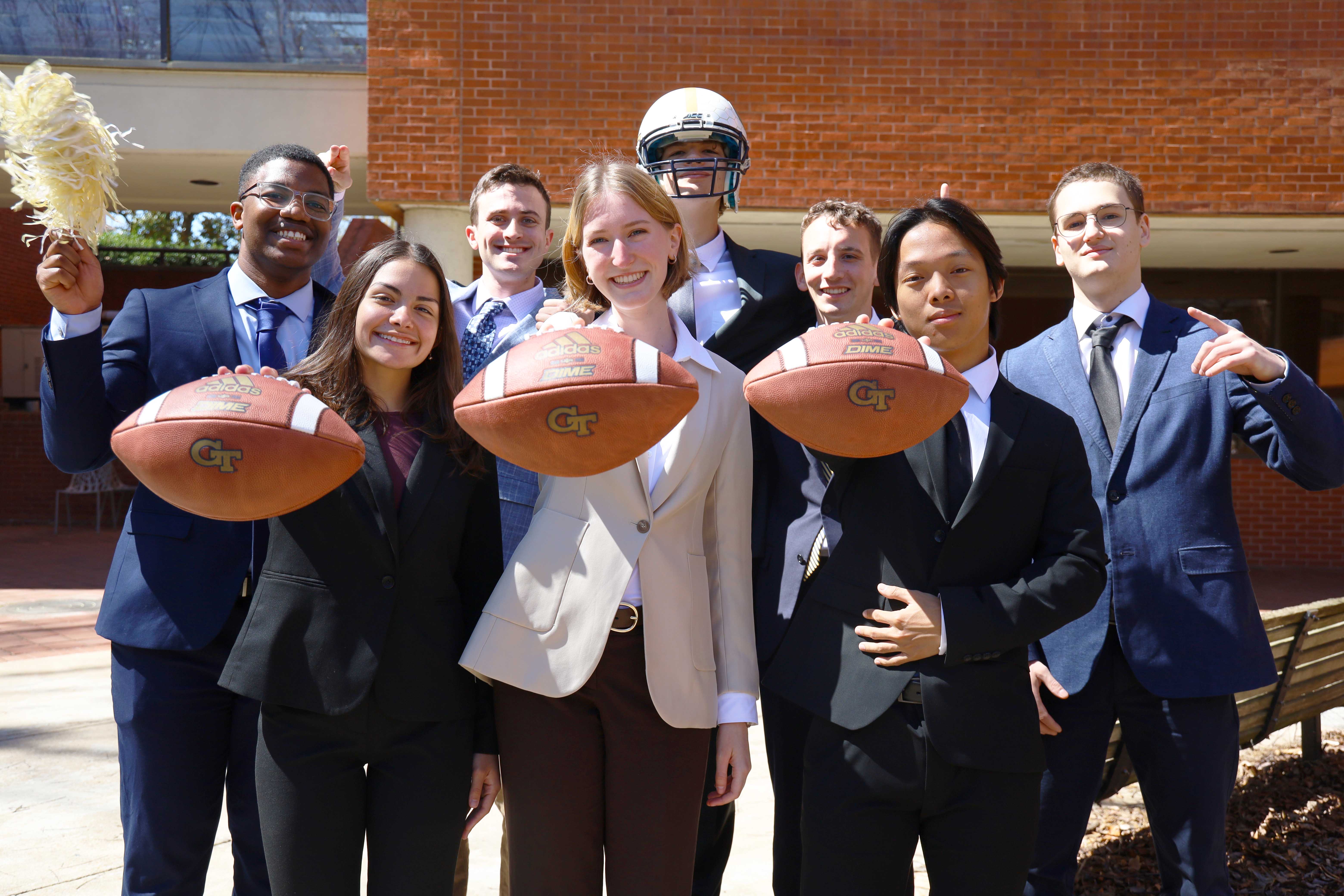
Team Linebackers: Georgia Tech Athletic Association (GTAA)
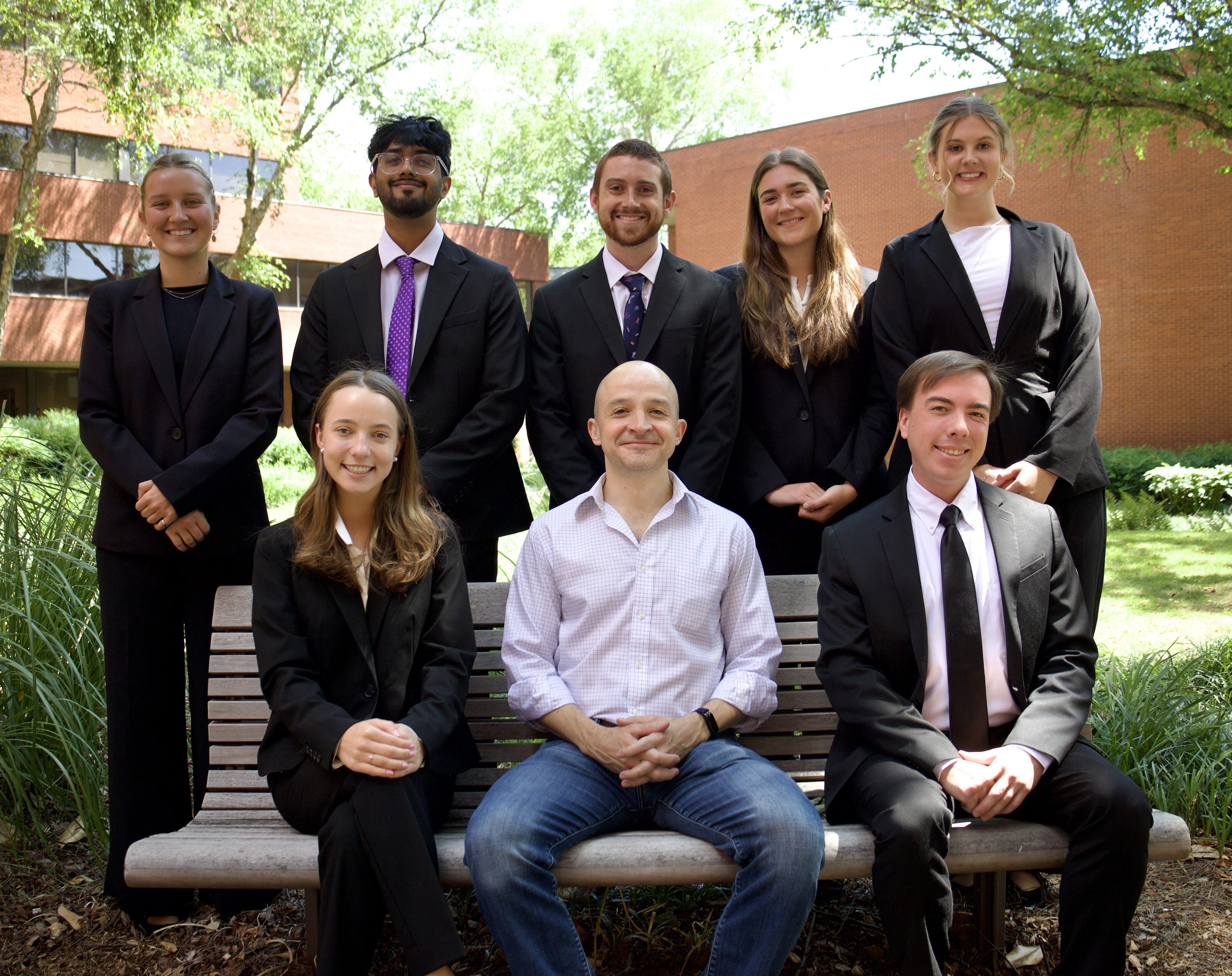
Team Buzz on the Beach
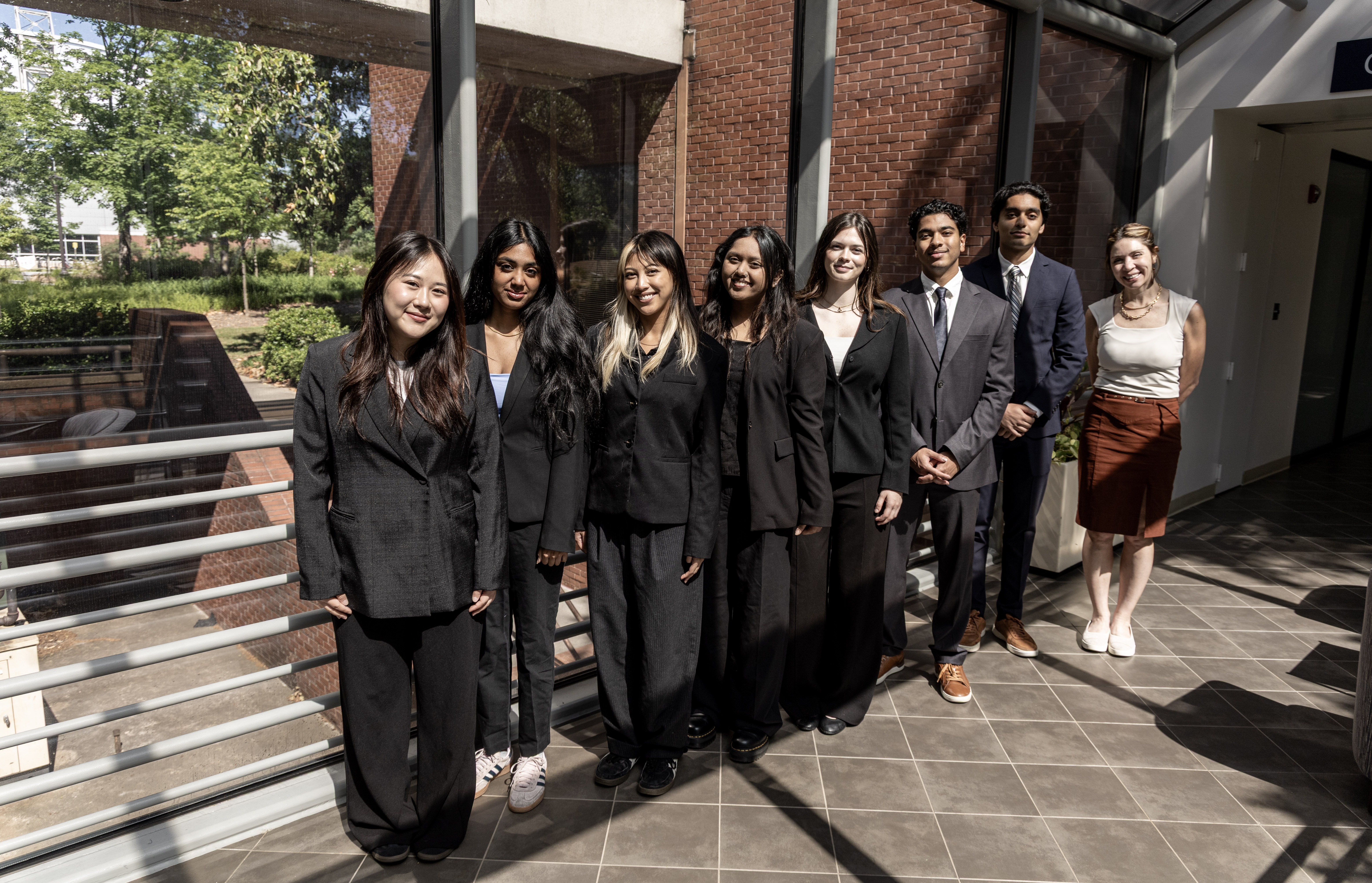
Team Improving First-Year Registration: FASSET Your SEATbelts
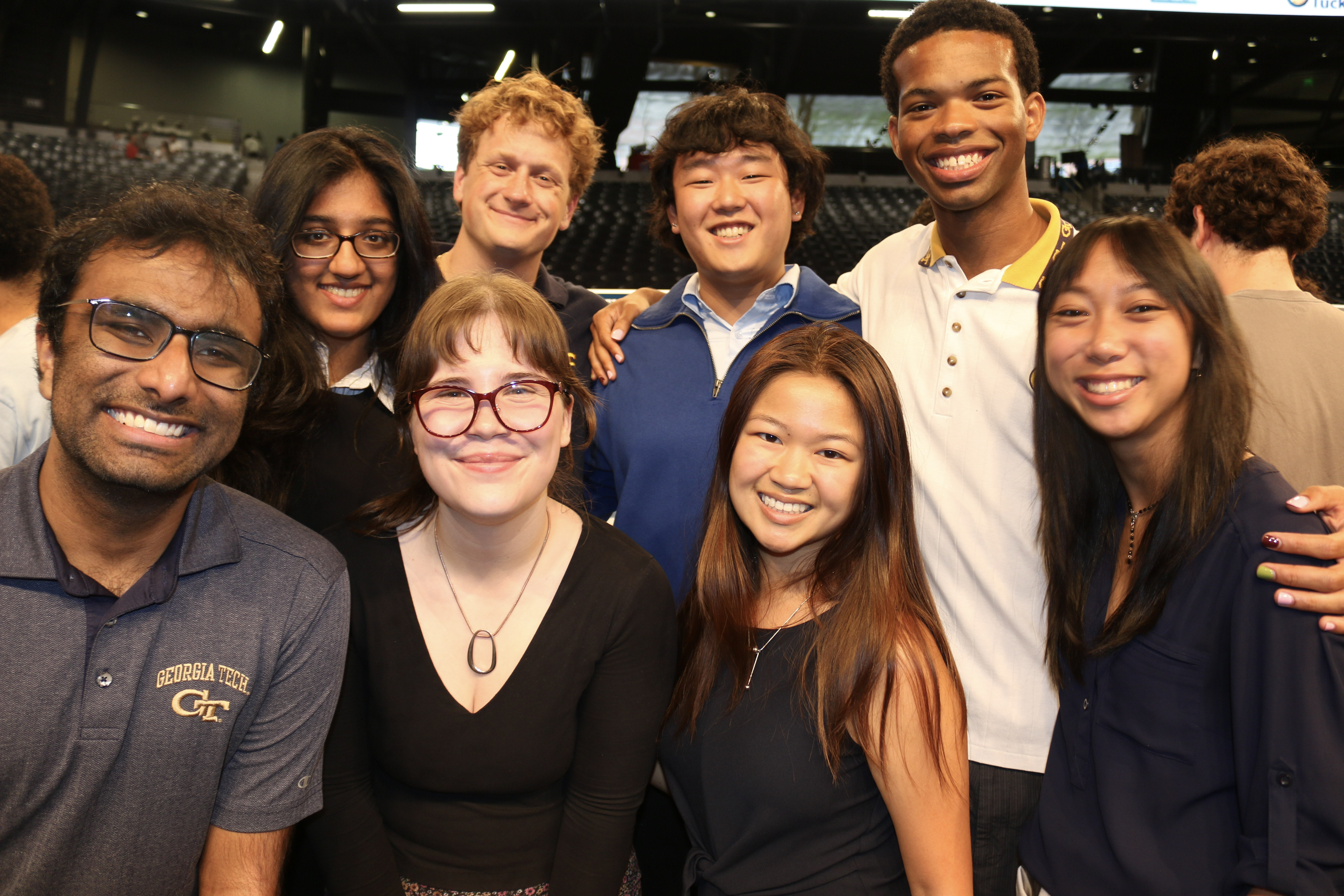
Team Lean on Me: Georgia Tech’s Academic Success & Advising (ASA)
For More Information Contact
Parker Avery, Student Writing Assistant