
Georgia Tech’s men’s basketball team was struggling during Chris Mast’s sophomore year. He thought the Yellow Jackets needed to make better decisions and that better data could help. So, when he spotted then-head coach Brian Gregory at a fraternity event, Mast walked up and made his pitch.
“They kept losing in the same way, every single time. I thought to myself ‘if coach just had really good data, maybe we’d win some games,’” Mast (IE 2015) jokingly said. “I met Coach Gregory at the front door of that fraternity event, pitched him my idea, and he liked it. I did everything in Excel with ‘Moneyball-Style’ lineup optimization. It worked, they changed their style, we started winning games, and we beat North Carolina that year.”
Mast’s scrappy beginning in sports analytics eventually led to work with the Atlanta Hawks from 2017-2021 and to his current role as a sports scientist for the Detroit Pistons.
Mast shared his story during a recent Georgia Tech ISyE alumni entrepreneurship panel moderated by Advisory Board Chair Evren Ozkaya, PhD IE 2008, Founder and CEO of Supply Chain Wizard and SCW.AI.
They were joined by Fred Grimm, IE 2014, co-founder and COO of FIXD; Andy Ibbotson, IE 1998, founder of RatingsMD; and Jeff Anderson IE 1991, co-founder and chief growth officer of Kaizen Analytix.
Together, the panelists offered a candid look at the grind of building a company and the systems-minded discipline that gives ISyE graduates a distinctive edge.
The Scrappy Era: Learning by Doing
For Grimm and two of his Georgia Tech classmates, the founding idea behind FIXD started with a common frustration: most drivers did not know why their check-engine light was on. And finding out was expensive and inconvenient. Their answer was a plug-in diagnostic device paired with a smartphone app that put that information directly in a driver’s hands.
What began as a senior project launched on Kickstarter in 2014 would raise $37,000. It was grown into one of the nation’s most widely used automotive apps.
FIXD’s early days were far from glamorous. Grimm remembers working from a windowless “closet” in the basement of a campus building and looking for customers anywhere they could find them. The team would even go to Piedmont Park and stop strangers to pitch their concept.
“We realized that if we talked to people, we could sell to about 60% of them,” Grimm said. “It wasn't scalable, but it taught us how to talk to customers.”
Ibbotson described a different kind of test during the panel discussion: surviving the “nuclear winter” after the dot-com bubble burst.
“My business partner and I stopped taking salaries. We both were paid $2,000 a year for two years, while continuing to pay six-figure salaries to our remaining employees,” he said. “We were betting that things would be good on the other end. Our competitors were going out of business, but we just kept persevering.”
The ISyE Advantage: Systems Thinking in Action
A recurring theme during the discussion was that ISyE graduates are trained not just to solve isolated problems, but to understand how the pieces fit together. Ozkaya noted that many entrepreneurs focus on a single feature or narrow pain point. The stronger opportunity is often broader: designing the operating system around the problem: the data, incentives, workflows, decisions, and people that must work together for a solution to scale.
Mast connected that idea to what he learned at Georgia Tech.
“A fifth-year student once told me that Tech teaches you how to think. That mindset stayed with me,” Mast said. “I truly don't believe there is a problem I can’t solve. I know how to convert problems into bite-sized chunks and attack them.”
The AI Inflection Point
The panelists agreed that artificial intelligence is changing the economics and pace of entrepreneurship. Ibbotson recalled that when he started his first company, he spent $100,000 on a Dell server and Microsoft Exchange licenses just to provide corporate email. Many of those barriers have since disappeared.
“For example, my 13-year-old son recently used AI to build a minimum viable product in two months for less than $200,” Ibbotson said. “It would have taken my partner and me 12 months and $200,000 many years ago.”
Anderson said AI is also changing the way established teams operate, allowing engineering teams to move dramatically faster. The premium skill, he argued, is no longer simply the ability to code quickly.
“It’s the ability to define the problem clearly, ask better questions, and make sound decisions,” Anderson said. “In other words, the speed of tools makes the quality of thinking even more important.”
Advice for the next generation of founders
The panel closed with practical advice for students and alumni considering an entrepreneurial path. The message was direct: start before the risk feels comfortable. Financial obligations tend to grow over time, while the ability to experiment is often greatest early in a career.
The panelists urged founders to listen carefully to customers and that a company does not have to be first to win because being a fast follower can be powerful when the problem is already understood, the market has a budget, and the founder can execute with better insight and discipline.
“Another Georgia Tech grad who had just exited his software company was trying to figure out what to do next. And one of our customers — early customers that he was friends with — said, ‘Hey, Andy just sold his company to NRC. Why don’t you build the same thing and try to sell it to their competitor,’” Ibbotson said. “And so, they we were, second to market, not as good, but NRC’s competitor needed an offering to be competitive with ours. They ended up selling for $70 million more than we sold for, even though they didn’t have a good solution because the bigger company needed something.”
The panelists encouraged students to use the Georgia Tech and ISyE network aggressively, noting how a single faculty introduction or alumni connection can open doors that would otherwise be difficult to reach.
“Lots of coffee, lots of sleepless nights, lots of hard work. You need to outlive the competition, and connections and networking is critical,” Ozkaya said. “I wrote an article a year into Supply Chain Wizard and said: ‘Eat, pray, love and network.’ You need to love what you do, you need to pray that you survive, and you need to network. Networking is what brings you the opportunities.”
Meet the Panelists:
· Fred Grimm (IE 2014): Co-founder & COO, FIXD.
· Andy Ibbotson (IE 1998): Founder, RatingsMD.
· Jeff Anderson (IE 1991): Co-founder & Chief Growth Officer, Kaizen Analytix.
· Chris Mast (IE 2015): Sports Scientist, Detroit Pistons.
· Evren Ozkaya (Moderator, IE 2005): Founder & CEO, Supply Chain Wizard and SCW.AI
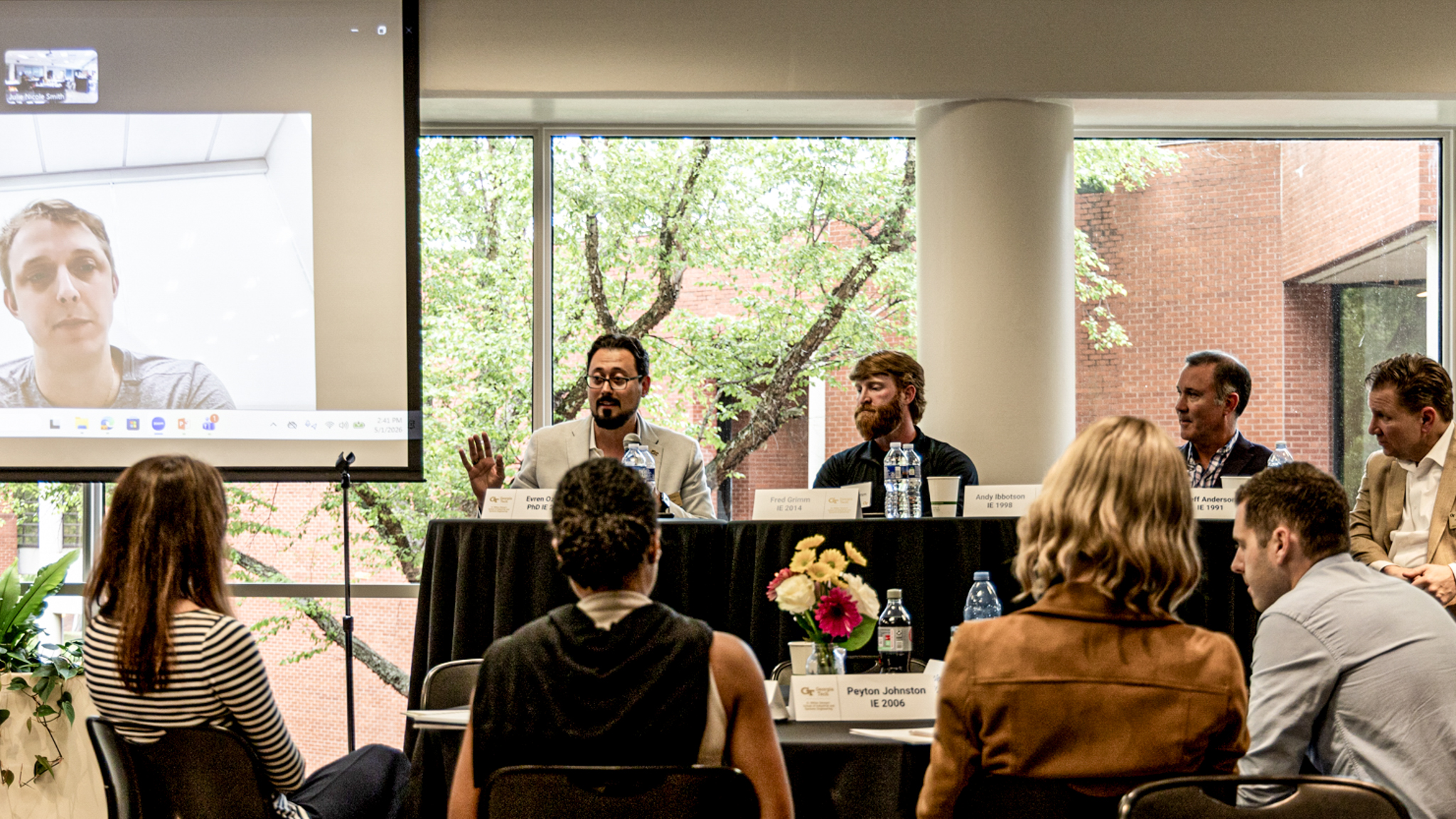
Evren Ozkaya (IE 2005): Founder & CEO, Supply Chain Wizard and SCW.AI moderates ISyE Entrepreneurship Panel
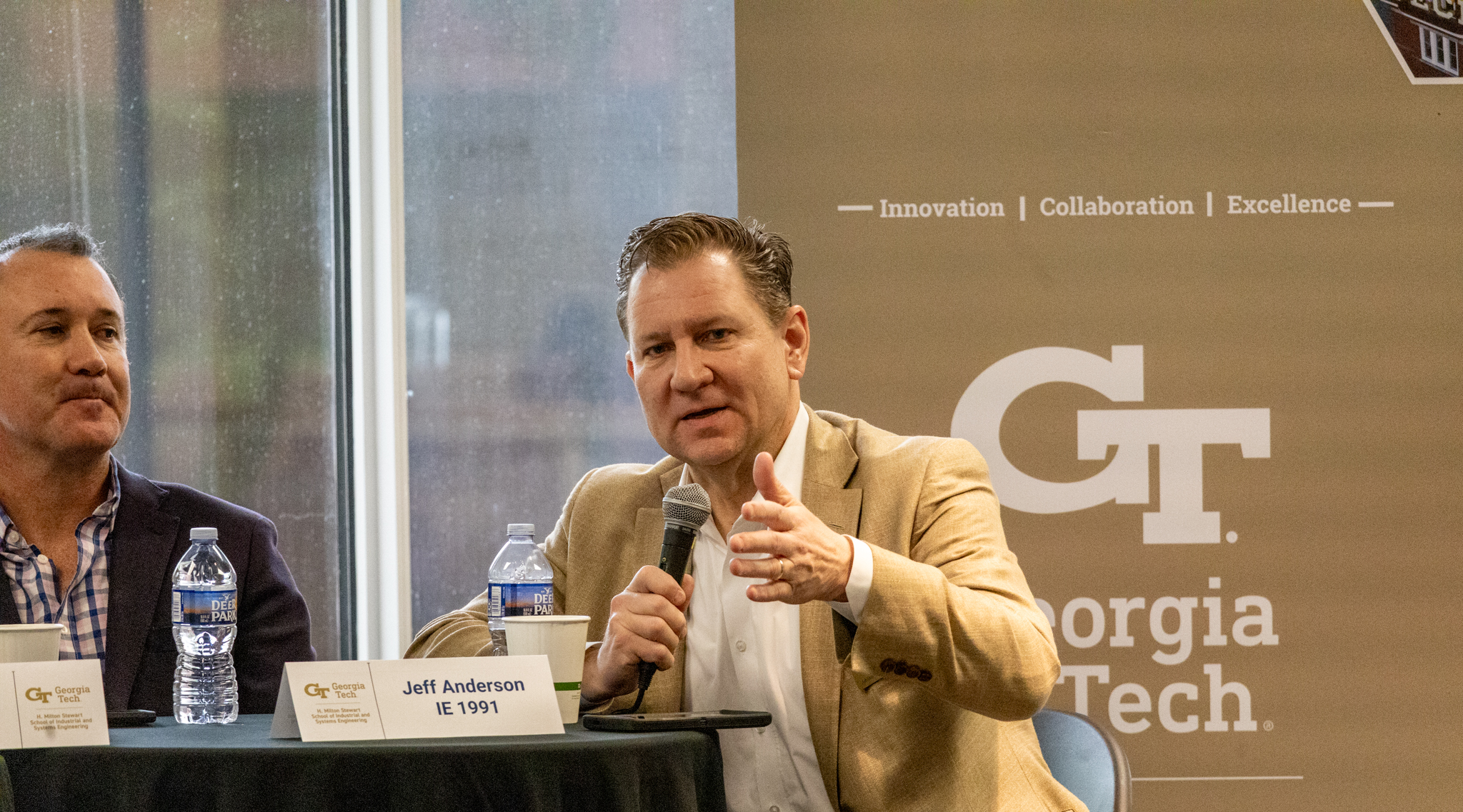
Jeff Anderson (IE 1991): Co-founder & Chief Growth Officer, Kaizen Analytix
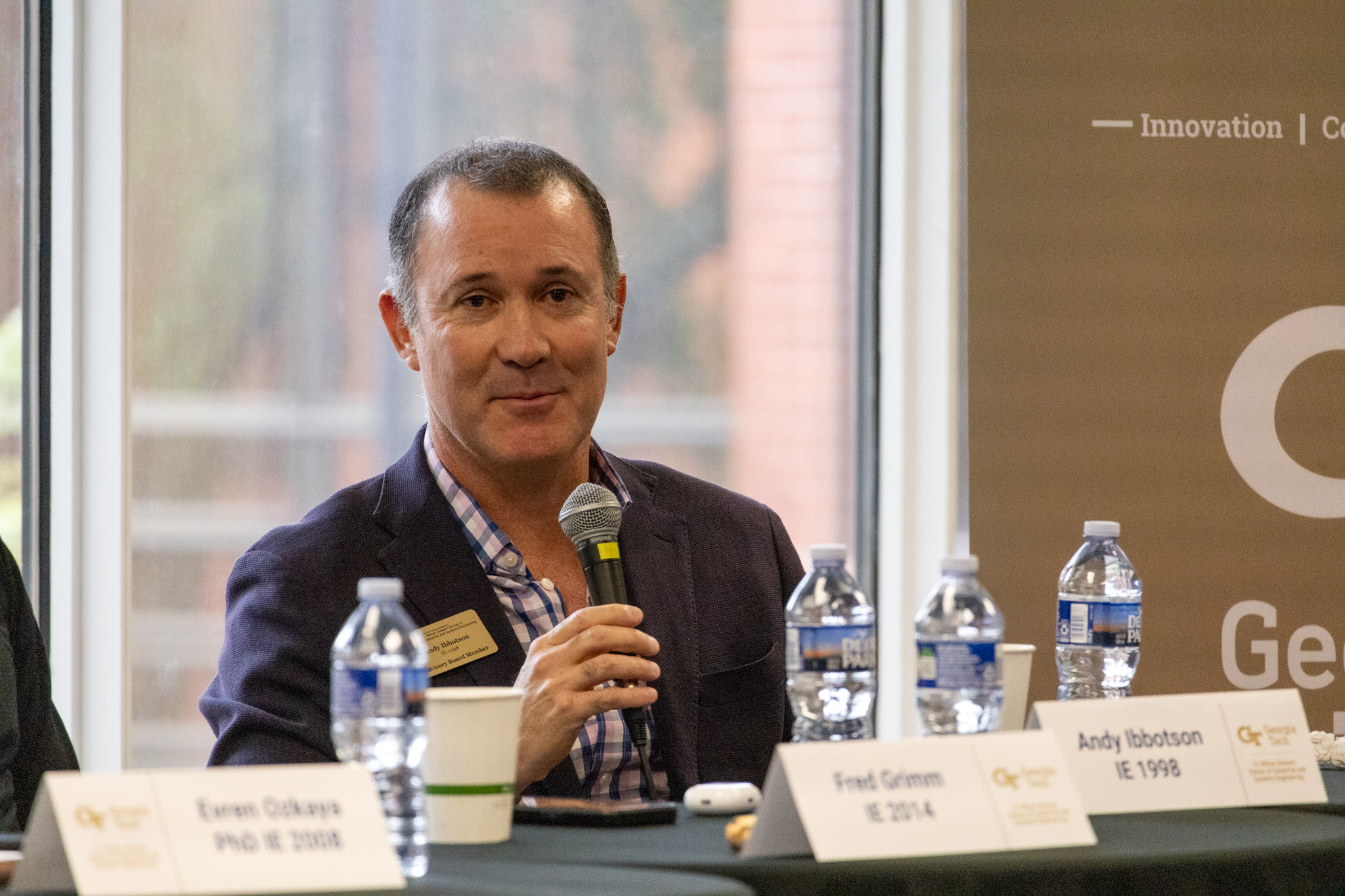
Andy Ibbotson (IE 1998): Founder, RatingsMD
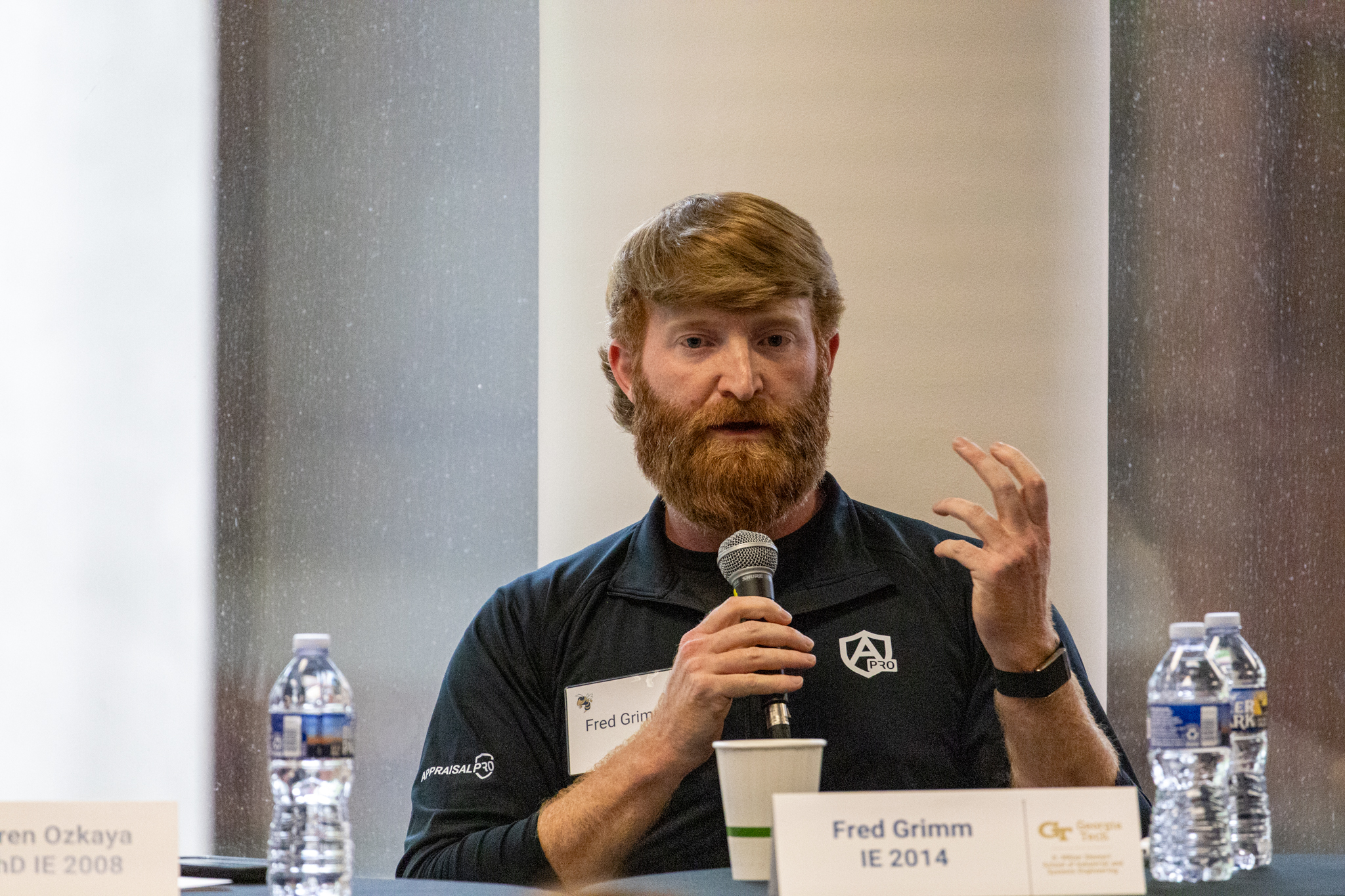
Fred Grimm (IE 2014): Co-founder & COO, FIXD
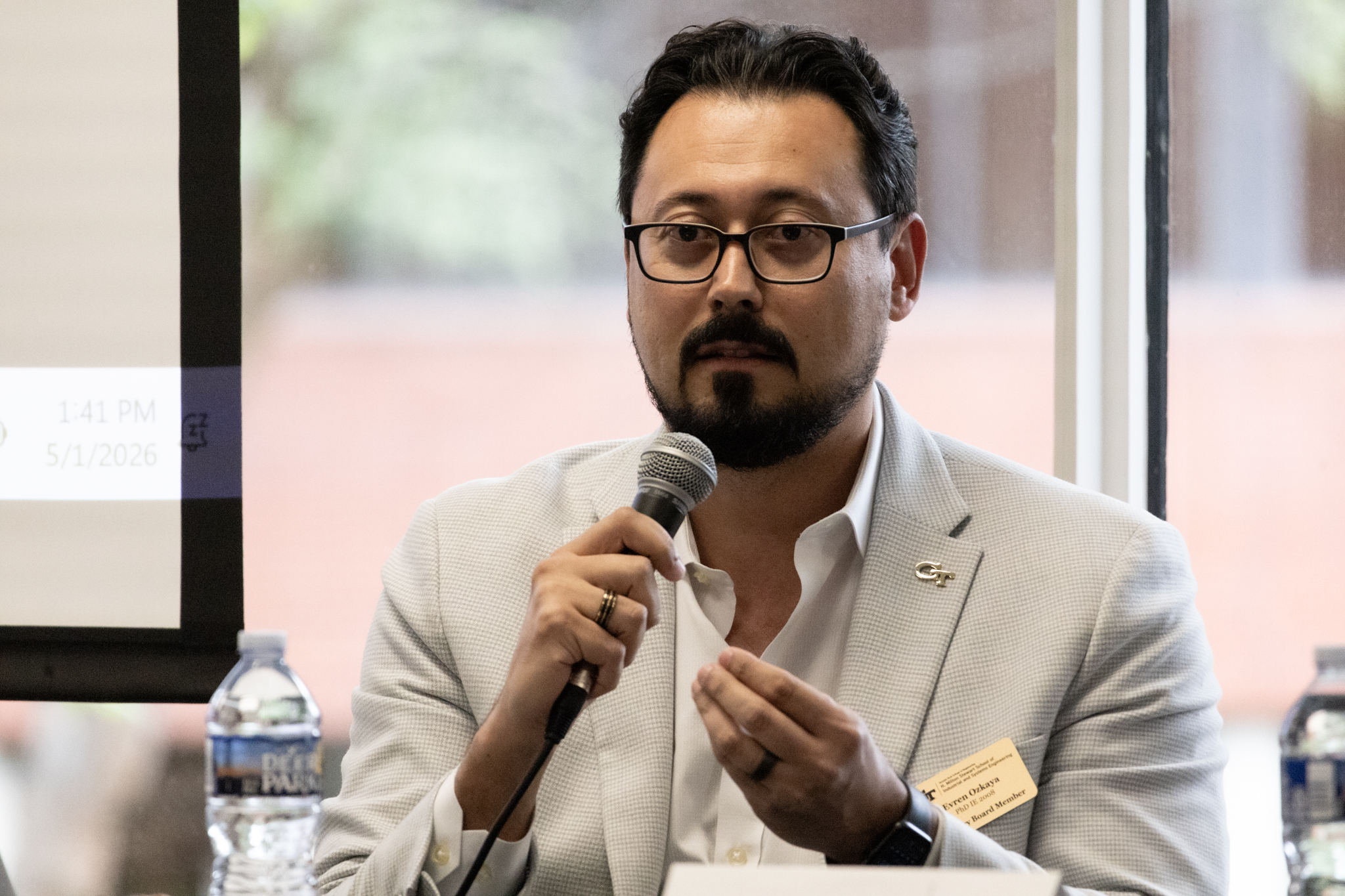
Evren Ozkaya (IE 2005): Founder & CEO, Supply Chain Wizard and SCW.AI