
The Future of
AI-Powered Manufacturing
BY ANNETTE FILLIAT
Manufacturing is at an inflection point. Across industries, companies are grappling with rapid digital transformation, the integration of artificial intelligence (AI), and the urgent need for resilient, sustainable systems. Industrial and systems engineering — with its deep roots in process and quality improvement and advanced analytics — is stepping into this moment to drive innovation in manufacturing ecosystems.
“It’s a pivotal time for collaboration,” said Pinar Keskinocak, H. Milton and Carolyn J. Stewart School Chair and professor in the H. Milton Stewart School of Industrial and Systems Engineering (ISyE). “We are uniquely positioned to connect foundational engineering principles with emerging AI technologies — helping shape the future of smart, efficient, resilient, and sustainable manufacturing systems.”
ISyE is launching its Manufacturing and AI Initiative to unite pioneering researchers with interdisciplinary partners in the development of research and education programs that address issues of industrial, societal, and global concern. The initiative focuses on the following key enabling technologies that are transforming modern industrial systems:
- AI-enabled manufacturing process optimization
- Integrated asset management and security
- Human-centered manufacturing
Together, these areas position ISyE at the forefront of shaping AI-powered manufacturing. And while these opportunities have the potential to create more innovative products, reduce costs, accelerate productivity, and increase sustainability, researchers are also addressing the potential challenges.
“Because data science is at the center of manufacturing and AI, we need to contextualize the immense amount of data to effectively enable AI,” shared Kamran Paynabar, associate chair for innovation, leadership, and entrepreneurship and Fouts Family Chair and professor in ISyE. “Some of the greatest challenges of modern manufacturing systems are to make sense of vast amounts of data and ensure efficient operations.”
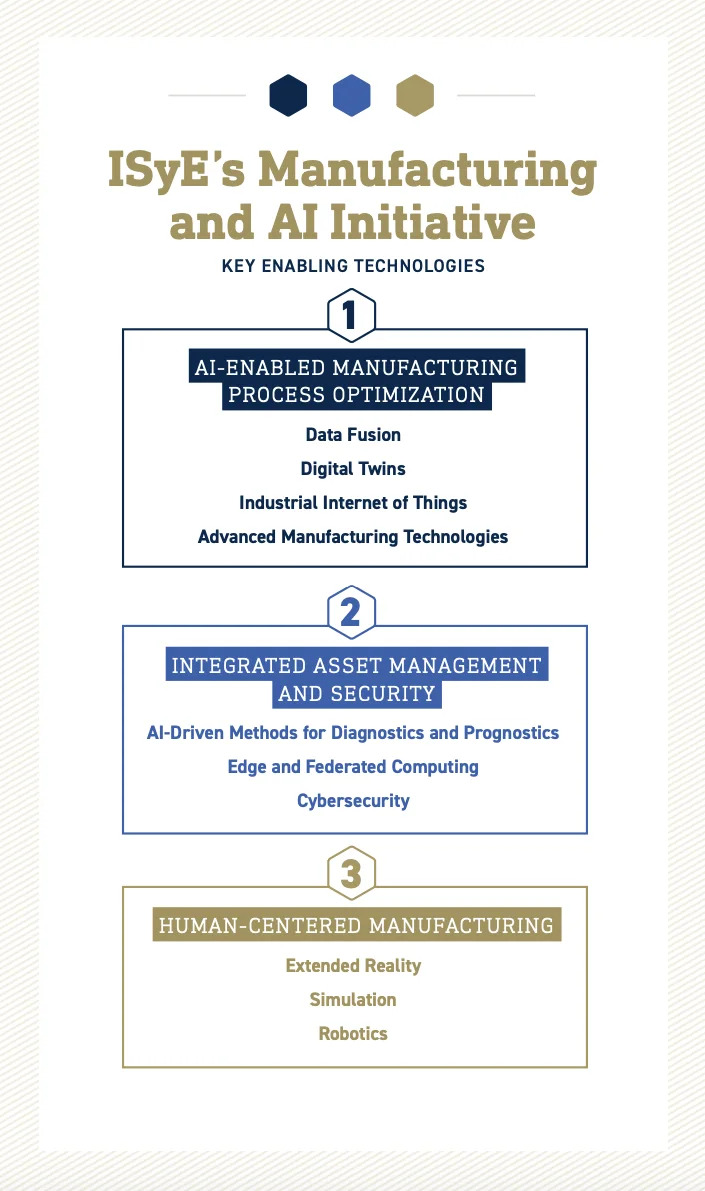
Read long description of the image
ISyE’s Manufacturing and AI Initiative – Key Enabling Technologies
The diagram presents three main categories of technologies that support ISyE’s Manufacturing and AI Initiative. Each category is shown as a numbered section with a heading and a list of related technologies.
1. AI‑Enabled Manufacturing Process Optimization
- Data fusion
- Digital twins
- Industrial Internet of Things
- Advanced manufacturing technologies
2. Integrated Asset Management and Security
- AI‑driven diagnostics and prognostics
- Edge and federated computing
- Cybersecurity
3. Human‑Centered Manufacturing
- Extended reality
- Simulation
- Robotics
“It’s a pivotal time for collaboration.
We are uniquely positioned to connect foundational engineering principles with emerging AI technologies.”
— PINAR KESKINOCAK, H. MILTON AND CAROLYN J. STEWART SCHOOL CHAIR AND PROFESSOR, ISyE
AI-enabled manufacturing process optimization
Data Fusion
Applying AI-Enabled Quality Improvement Methodologies to Multistage Manufacturing Systems
Multistage manufacturing systems (MMS) generate massive, complex data, and researchers are pioneering methods to turn that information into actionable insights.
“In MMS, the product quality can be affected by local variation and upstream influences,” explained Jianjun Shi, Carolyn J. Stewart Chair and professor in ISyE and a member of the National Academy of Engineering. “With the rise of advanced sensors, we can gather vast amounts of heterogeneous data, but the challenge lies in merging this data with engineering expertise using data science tools.”
Shi and his team’s In-Process Quality Improvement (IPQI) and Stream of Variation methodologies fuse data science with systems theory to improve the design and operation of MMS. These AI-enabled approaches allow process monitoring, diagnosis, and defect prevention, which move beyond traditional quality control. The methodologies are being widely implemented in the aerospace, automotive, and semiconductor industries with substantial social and economic impacts.
“IPQI methodologies are enabling significant AI-powered developments because of the advancements of data analytics, AI/machine learning (ML) techniques, and unprecedented computational capabilities; the availability of tremendous sensing signals, data acquisition, and networking capabilities; and the requirements of high precision, performance, productivity, flexibility, agility, and low cost in manufacturing systems,” he added.
Recently, Shi and his team applied AI-enabled quality improvement methodologies to the modeling, monitoring, diagnosis, and control of MMS. Supported by the Boeing Company and the NSF, they developed high-precision fuselage assembly for Boeing 787 aircraft with active shape control and optimal actuator placement by using sparse and reinforcement learning. Because the fuselage must withstand extreme environmental conditions, immense pressure loads, and constant vibrations, precision assembly is essential for ensuring an aircraft’s safety, structural integrity, and aerodynamic performance.
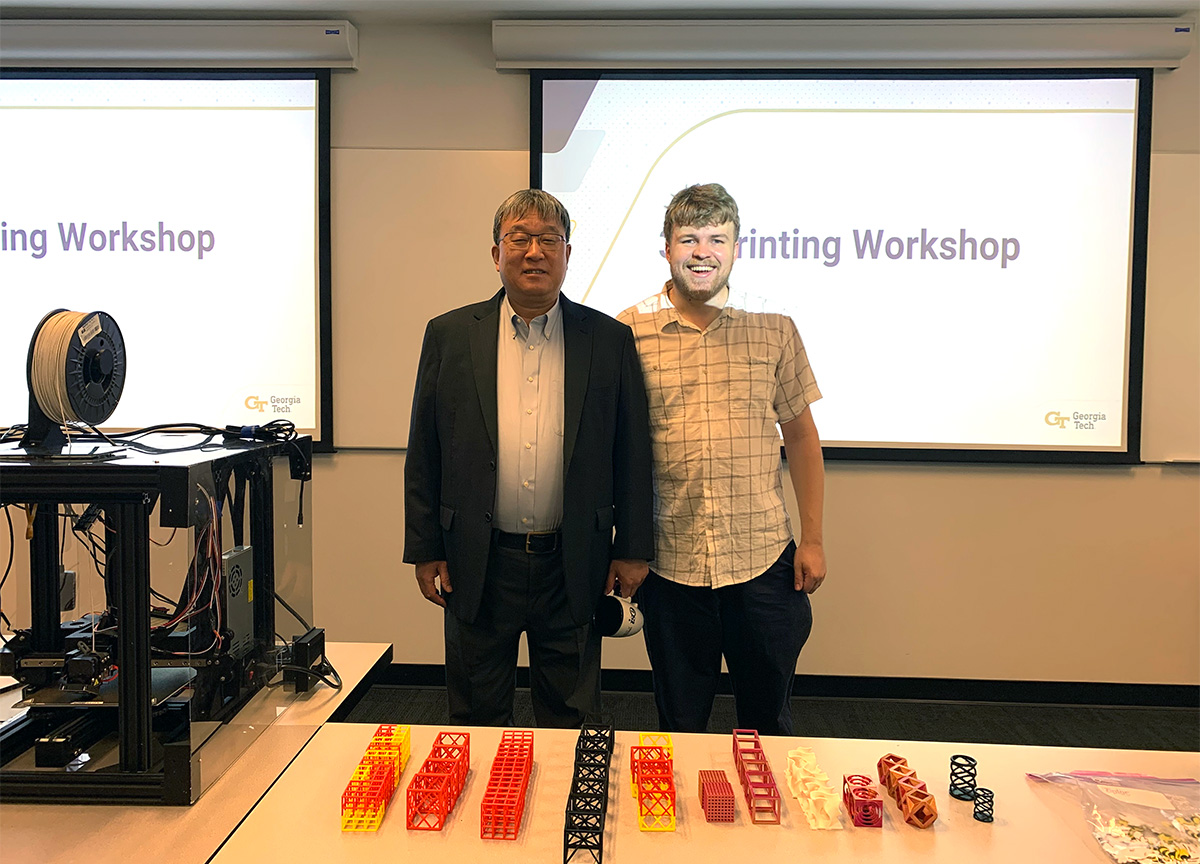
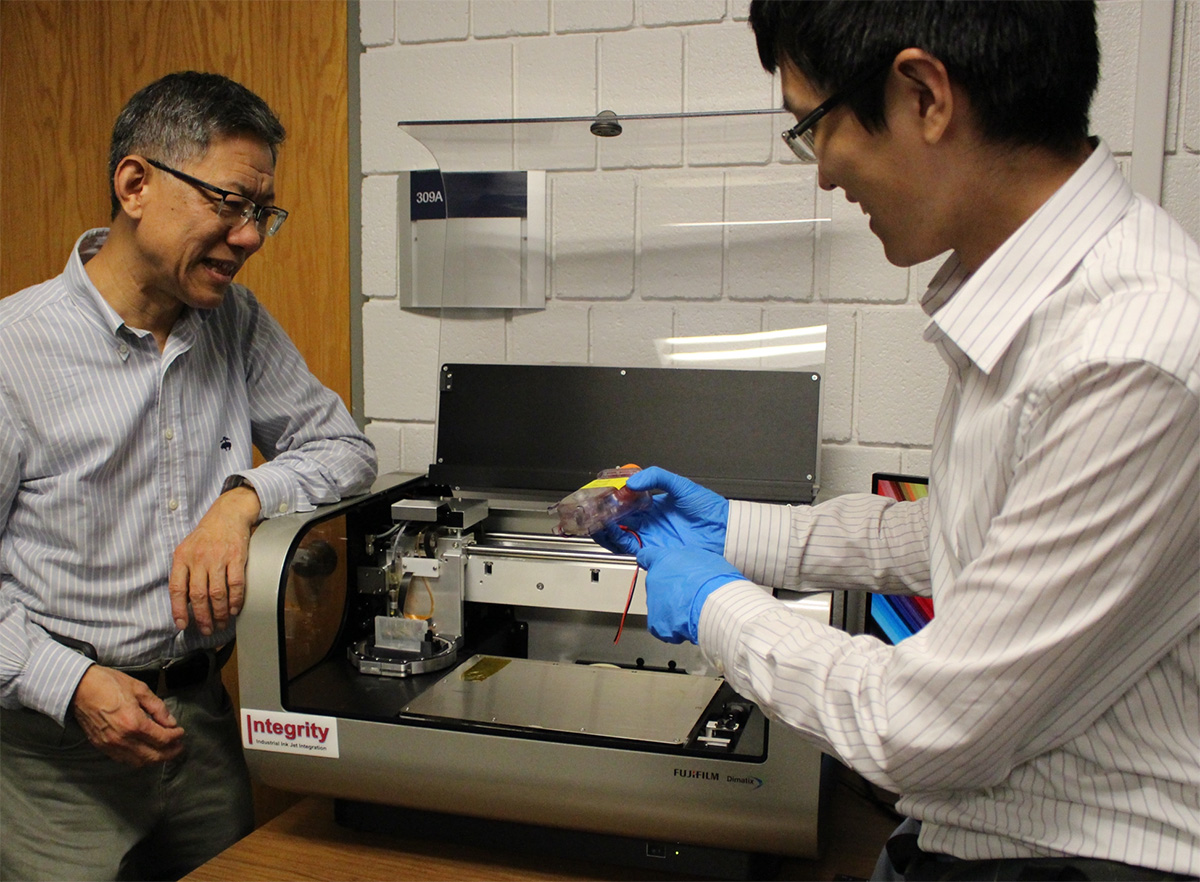
Photo by Michael Biehler. / Jianjun Shi (left) advises Michael Biehler (Ph.D. IE 2024) in a 3D printing workshop for K-12 students.
Digital Twins
Developing Digital Twins to Stress Test and Secure the Biomanufacturing Supply Chain
The supply chain of a biological product can be derailed at many junctions — from cyberattacks to pandemics. With support from the U.S. Department of Defense (DoD)’s BioMADE, Chelsea C. White III, Schneider National Chair in Transportation and Logistics and professor in ISyE, co-led the development of an affordable simulation platform that stress tests bioindustrial manufacturing facilities and supply chains.
“The simulation platform can be customized to evaluate the potential impact of various disruptions, then it can help a company decide how to respond, recover, possibly reconfigure supply chain or manufacturing processes, or even redesign a product,” said White, who worked alongside Ben Wang, professor emeritus in ISyE and former executive director of the Georgia Tech Manufacturing Institute (GTMI), and Kevin Wang, senior research faculty in GTMI.
One disruption example is if a bio-based business loses a supplier and wants to know how much extra inventory to stock.
The work’s significance extends beyond productivity. Melanie Tomczak, chief technology officer and head of programs at BioMADE, explained that the DoD is interested in this research to help secure the U.S. biomanufacturing supply chain — reducing reliance on foreign sources, enabling rapid response to crises, protecting from emerging threats, and promoting economic growth.
Advanced Manufacturing Technologies
Biomanufacturing Immune Cells to Treat Hard-to-Cure Cancers
ISyE researchers are working to design biosensors that can improve the treatment of some of the most aggressive cancers.
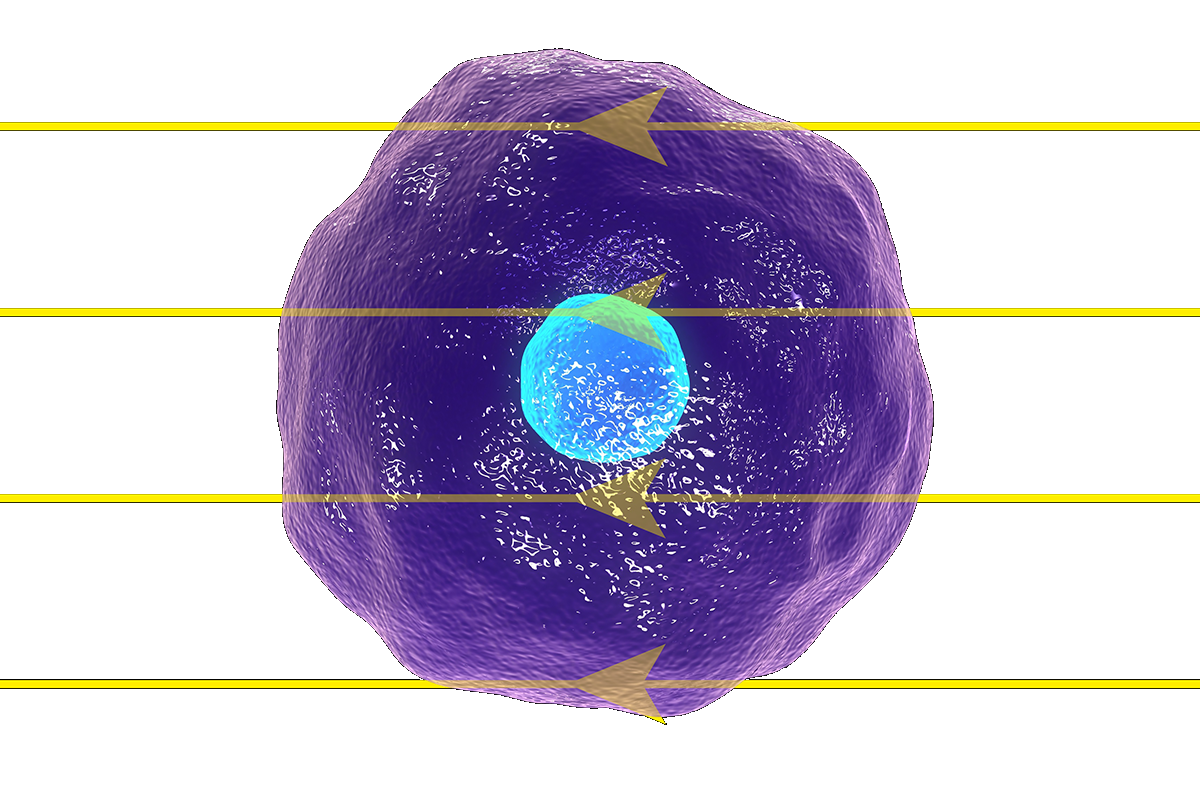
Unlike chemotherapy, chimeric antigen receptor (CAR)-T-cell therapy engineers a patient’s own immune cells to fight cancer. “CAR-T-cell therapy shows great promise to treat hard-to-cure cancers, but its widespread adoption is limited by labor-intensive, expensive, and inconsistent cell manufacturing processes,” said Chuck Zhang, Eugene C. Gwaltney, Jr. Chair and professor in ISyE. “To address this challenge, the precise monitoring and control of the cell growth process are critical.”
Zhang and his team developed low-cost, disposable biosensors for real-time, in-line monitoring of suspension cell culture. By incorporating an AI/ ML algorithm, they eliminated lengthy calibration processes for cell density sensing — enabling continuous monitoring, accurate time-to-delivery estimation, and improved quality assurance of the modified cells.
“These innovations are paving the way for more accessible, affordable, and high-quality CAR-T-cell therapy,” added Zhang.
“These innovations are paving the way for more accessible, affordable, and high-quality CAR-T-cell therapy.”
— CHUCK ZHANG, EUGENE C. GWALTNEY, JR. CHAIR AND PROFESSOR, ISyE
SIDEBAR
Advancing the 3D Bioprinting Field Through Transfer Learning
Bioprinting is a type of biofabrication technology — combining 3D printing with life sciences — that has diverse applications from creating transplantable organs to cell-cultured meats. The technology, however, is still in its infancy.
"Despite research efforts to enhance process modeling, optimize capabilities, and explore new conditions, a critical need remains to improve the process efficiency of bioprinting,” said Paynabar.
AI-driven approaches are emerging as powerful tools for optimizing bioprinting processes. In a European Union-funded study, Paynabar and collaborators introduced a transfer learning framework that enables resource-efficient modeling — addressing a key challenge in bioprinting when bioink formulations change.
“While ML has advanced bioprinting process optimization, it often struggles to produce reliable models,” he explained. “By enabling knowledge transfer, transfer learning overcomes this limitation and supports broader applications across diverse printing conditions and evolving technologies.”
Integrated Asset Management and Security

AI-Driven Prognostics
Predicting and Monitoring Aircraft Coating Degradation for Preemptive Maintenance
Coating protects aircraft from environmental damage and stress from flying, but traditionally, there has not been an effective way to perform real-time monitoring and assessment of the coating degradation over time — until now.
In collaboration with Lunar Technology, ISyE’s Coca-Cola Foundation Chair and Professor Yao Xie and her team predicted coating degradation in military aircrafts by introducing a statistically principled framework that used Hawkes point processes with detection to represent discrete degradation events. The algorithm relied on real-time data collected through edge devices and sensors, combined with AI models to support predictive maintenance.
“These methods projected how factors, including flight load, humidity, and temperature, can cause future damages and failures,” explained Xie, whose research was supported by the DoD’s Strategic Environmental Research and Development Program. “As a result, our framework can support smarter, more efficient preemptive maintenance decisions in aerospace and materials science applications.”
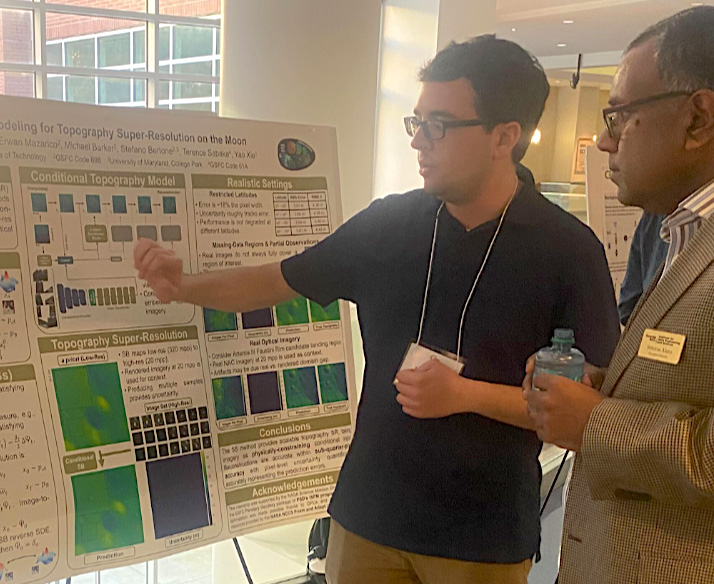
Photo by Pinar Keskinocak. / Matthew Repasky, a Ph.D. student in Machine Learning, presents a poster about his research.
Edge and Federated Computing
Developing Methodologies for Distributed Plants to Operate More Efficiently
ISyE’s Georgia Power Early Career Professor Nagi Gebraeel and his Predictive Analytics and Intelligence Systems (PAIS) team are using AI to improve operational efficiency and performance of distributed, multi-site manufacturing plants. The PAIS team is exploring how internet of things (IoT) interconnectivity and decentralized data analytics can drive real-time decision-making and adaptive control by enabling collaborative intelligence across sites — without costly centralized data aggregation.
In collaboration with Novelis and supported by the NSF, the team developed novel methods for uncovering causal relationships between geographically distributed machines and processes without the need to share raw data.
“By uncovering latent causal structures through this novel federated mechanism, our approach enables distributed plants to coordinate more effectively, anticipate downstream disruptions, and implement system-wide optimizations,” said Gebraeel. “Knowing ‘what drives what’ provides an auditable causal map that production engineers can inspect, validate, and act upon.”
“We are excited about this direction,” he added, “because it opens new avenues for intelligent coordination in complex manufacturing networks and sets the foundation for more explainable and trustworthy AI systems in industrial operations.”
Photos by Joshua Smith. / Nagi Gebraeel (right) advises graduate student Michael Ibrahim in the PAIS laboratory.
“We are excited about this direction because it opens new avenues for intelligent coordination in complex manufacturing networks.”
— NAGI GEBRAEEL, GEORGIA POWER EARLY CAREER PROFESSOR, ISyE
Cybersecurity
Detecting Covert Cyberattacks of SCADA Systems
Supervisory Control and Data Acquisition (SCADA) systems are frequently used in critical infrastructures, including manufacturing. Traditionally, these systems relied on isolated communication networks to ensure security and operational stability. The increasing integration of IoT, however, has expanded their connectivity — introducing new vulnerabilities to cyberattacks.
In 2024, U.S. utilities experienced a nearly 70% increase in cyberattacks compared to the previous year according to Check Point Research, and the nationwide power infrastructure is becoming more vulnerable as the grid grows rapidly to meet demand and assets are digitized (Reuters).
Supported by the U.S. Department of Energy, Paynabar, Gebraeel, and Dan Li, an ISyE Ph.D. graduate, recently developed ML methods to detect covert cyberattacks of SCADA systems. “These methods enable the detection of sophisticated attacks that are disguised as the natural behavior of SCADA systems and can help with distinguishing these attacks from system faults,” said Paynabar.
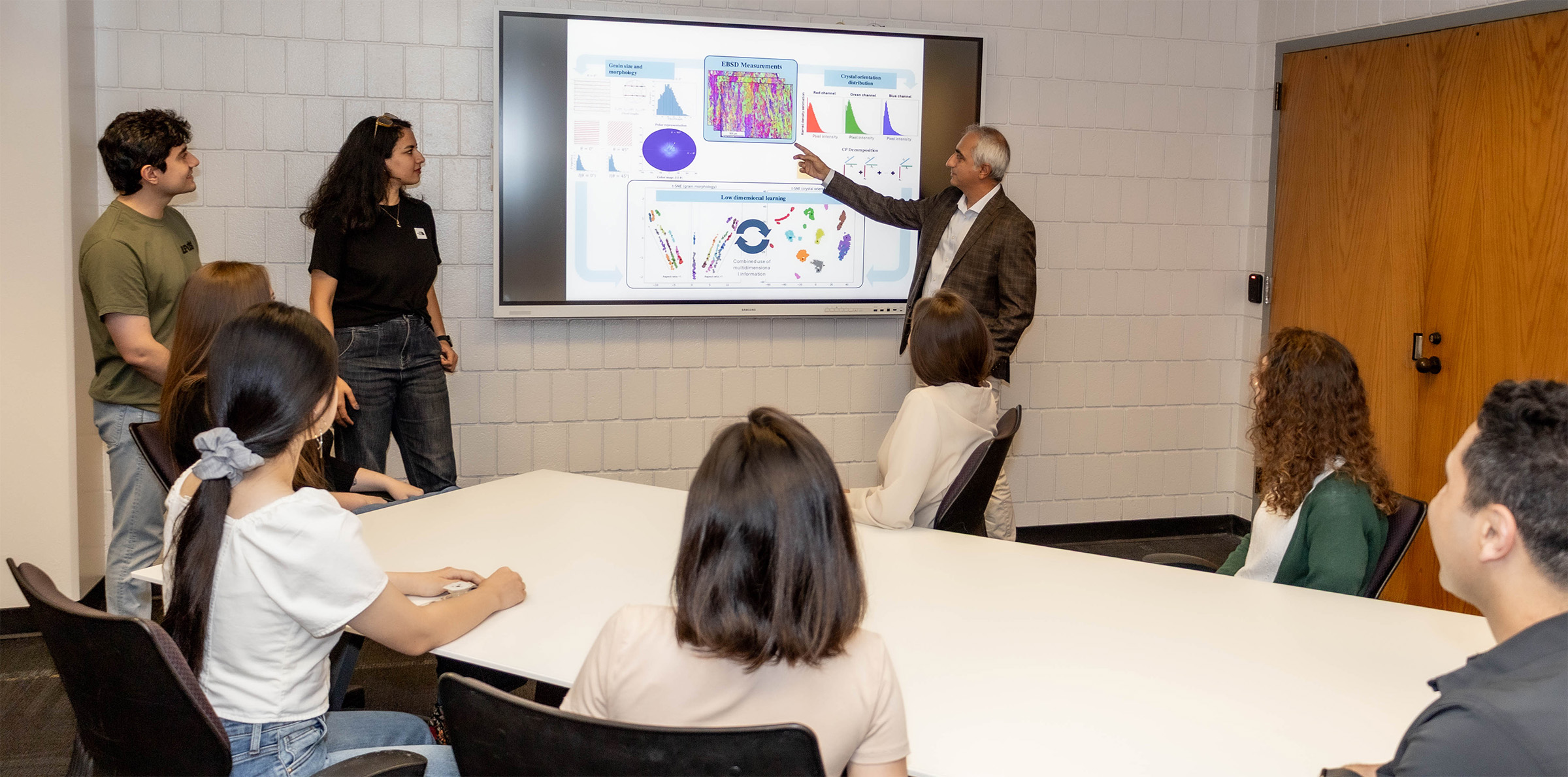
Photo by Joshua Smith. / Kamran Paynabar discusses electron backscatter diffraction measurements, including grain size and crystal orientation.
Human-Centered Manufacuring

Extended Reality
Augmenting, Not Replacing: How AI-Powered Extended Reality Could Expand Human Capabilities
Will smart machines replace human workers? ISyE researchers envision a future where intelligent technologies augment humans — cognitively and physically — rather than replacing them.
In the Symbiotic and Augmented Intelligence Laboratory (SAIL), Mohsen Moghaddam, ISyE’s Gary C. Butler Family Associate Professor, and his team are developing intelligent systems — driven by AI, extended reality (XR), and robotics — that expand human capabilities. The team is also advancing human-robot interaction where XR acts as a translator between people and machines.
“We are exploring how to build AI capabilities into XR that would serve as intelligent companions to look over your shoulder, understand what is happening around you, provide you with the right interventions, and help you complete various manufacturing tasks, such as assembly, inspection, and robot interaction,” said Moghaddam. “This symbiotic relationship would accelerate the progression of workers from novices to experts in future factories.”
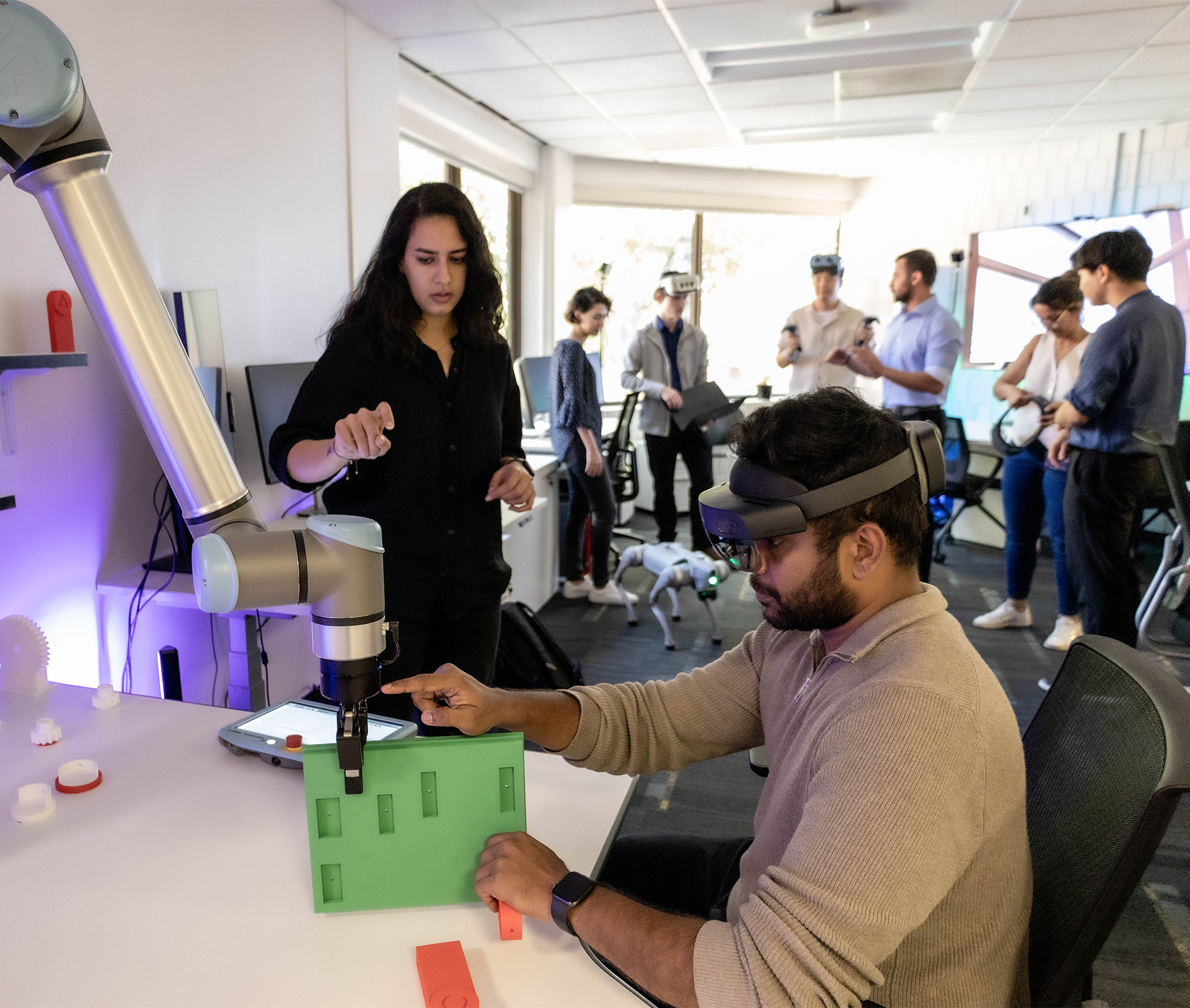
Photo by Joshua Smith. / The SAIL research team is developing intelligent systems — driven by AI, XR, and robotics — that expand human capabilities.
ISyE graduate student Akhil Ajikumar puts it simply: “At SAIL, we are using state-of-the-art XR and AI to create the future of work and enhance human capability. Imagine Tony Stark and J.A.R.V.I.S.”
Supported by the NSF, SAIL studied assembly and inspection in the aviation industry where the spatial and causal reasoning and decision-making abilities of workers are enhanced by partnering with intelligent XR technologies. “This research is addressing the urgent need for breakthrough technologies to enable the rapid upskilling of the manufacturing workforce,” Moghaddam added.
Robotics
Automating Assembly to Mitigate Workforce Absenteeism and Meet Demand
Many medical products are manually manufactured and assembled without the use of automation. How could automation have reduced some of the healthcare equipment challenges during the Covid pandemic — or even future pandemics?
“Manufacturers in this space are often small and midsize businesses without access to funding or the latest information about product design and processes,” said White, who co-led the project with Ben Wang and Kevin Wang. “Furthermore, any product design or process changes can, and would have, run into regulatory constraints.”
Georgia Tech and Texas A&M University researchers, funded by the Advanced Robotics for Manufacturing Institute, conducted a retrospective study of robot applications during Covid. One finding is that when demand surged for oxygen concentrators, as an equipment example, workforce absenteeism also increased, thus reducing manufacturing capacity.
“The team tested some ‘what-ifs’ using a digital twin by inserting cobots into the final assembly process for the oxygen concentrator, and we found that they mitigated the workforce absenteeism surge and accelerated the time to proficiency of novice workers who can replace sick peers,” added White.
“The team tested some ‘what-ifs’ using a digital twin by inserting cobots into the final assembly process for the oxygen concentrator, and we found that they mitigated the workforce absenteeism surge and accelerated the time to proficiency of novice workers.”
— CHELSEA C. WHITE III, SCHNEIDER NATIONAL CHAIR IN TRANSPORTATION AND LOGISTICS AND PROFESSOR, ISyE
SIDEBAR
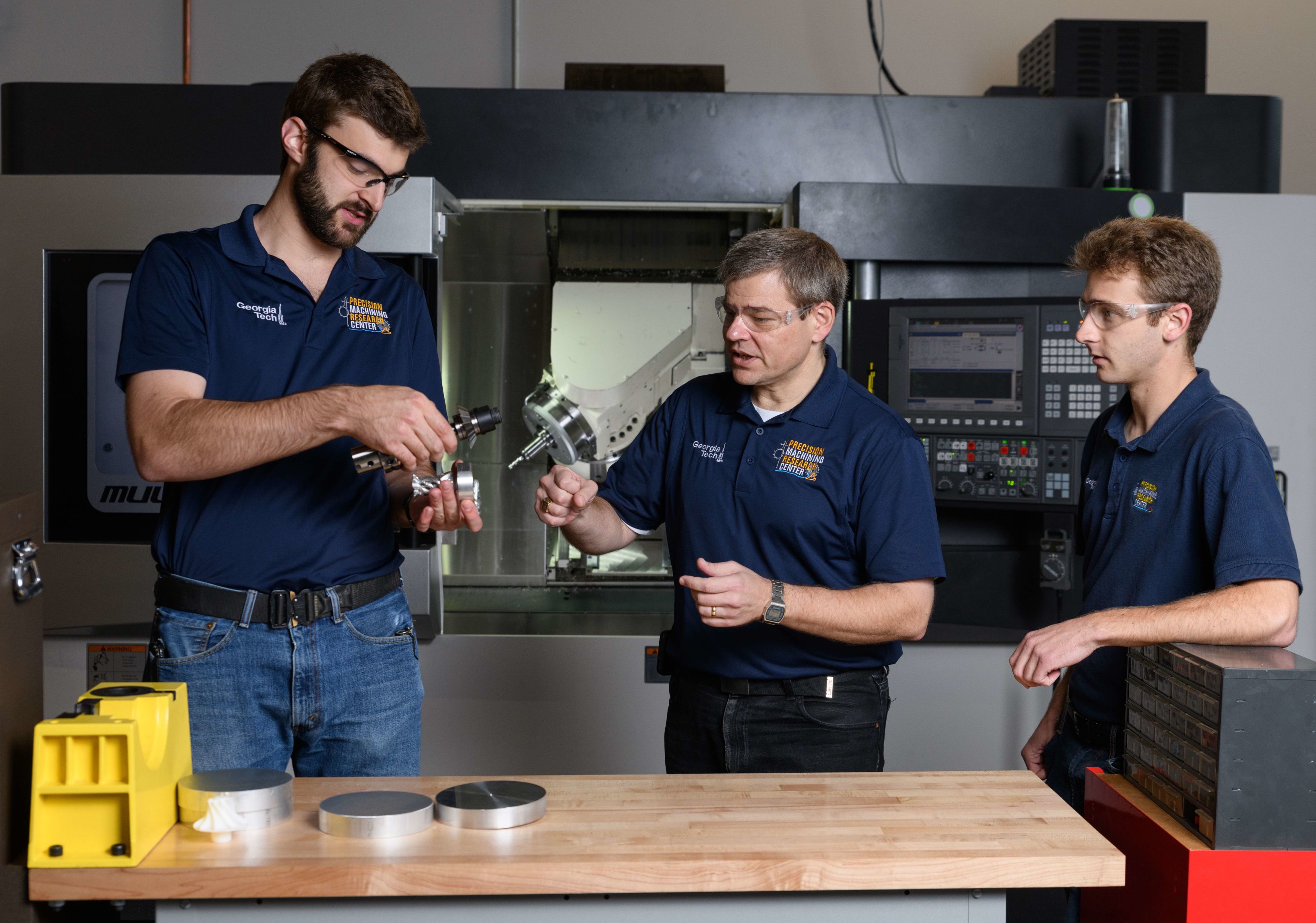
GTMI Accelerates Interdisciplinary Manufacturing Research From Lab to Market
GTMI — along with the Georgia Tech Research Institute and faculty from multiple schools including ISyE — partners with academia, industry, and government to lead research initiatives that accelerate progress in advanced manufacturing, sustainability, and workforce development. To facilitate both basic and applied research, GTMI has a variety of state-of-the-art facilities and equipment across campus.
GTMI’s flagship facility, the Advanced Manufacturing Pilot Facility (AMPF), was made possible by a $3 million gift from the Delta Air Lines Foundation. AMPF convenes industry experts with researchers and students to take early-stage concepts from idea to reality — housing innovative projects from additive manufacturing to industrial robotics.
"AMPF is a shared-use research and development facility where partners from government, industry, and academia come together to tackle the hardest challenges in advanced manufacturing,” said Steven Ferguson, principal research scientist at GTMI. “Our mission is to connect the dots by linking talent, technology, and real-world needs to the challenges — streamlining the translation of research into practice.”
ISyE faculty affiliated with GTMI include Christos Alexopoulos, Nagi Gebraeel, Jye-Chyi Lu, Leon McGinnis, Dima Nazzal, Kamran Paynabar, Jianjun Shi, Chelsea White, Jeff Wu, and Chuck Zhang.
Manufacturing the Next Generation of Skilled Workers
The U.S. manufacturing sector is experiencing a skills gap that could result in 2.1 million unfilled jobs by 2030 according to Deloitte and The Manufacturing Institute.
“That’s not just a workforce issue — it’s an economic and national security issue,” warned Carolyn Lee, president and executive director of The Manufacturing Institute, as these vacant jobs could potentially cost $1 trillion.
“The next generation of employees must be open to retraining as technology advances,” said Aaron Stebner, associate professor in the School of Materials Science and Engineering. “Education is going to be a lifelong learning process, and Georgia Tech can be at the forefront of that.”
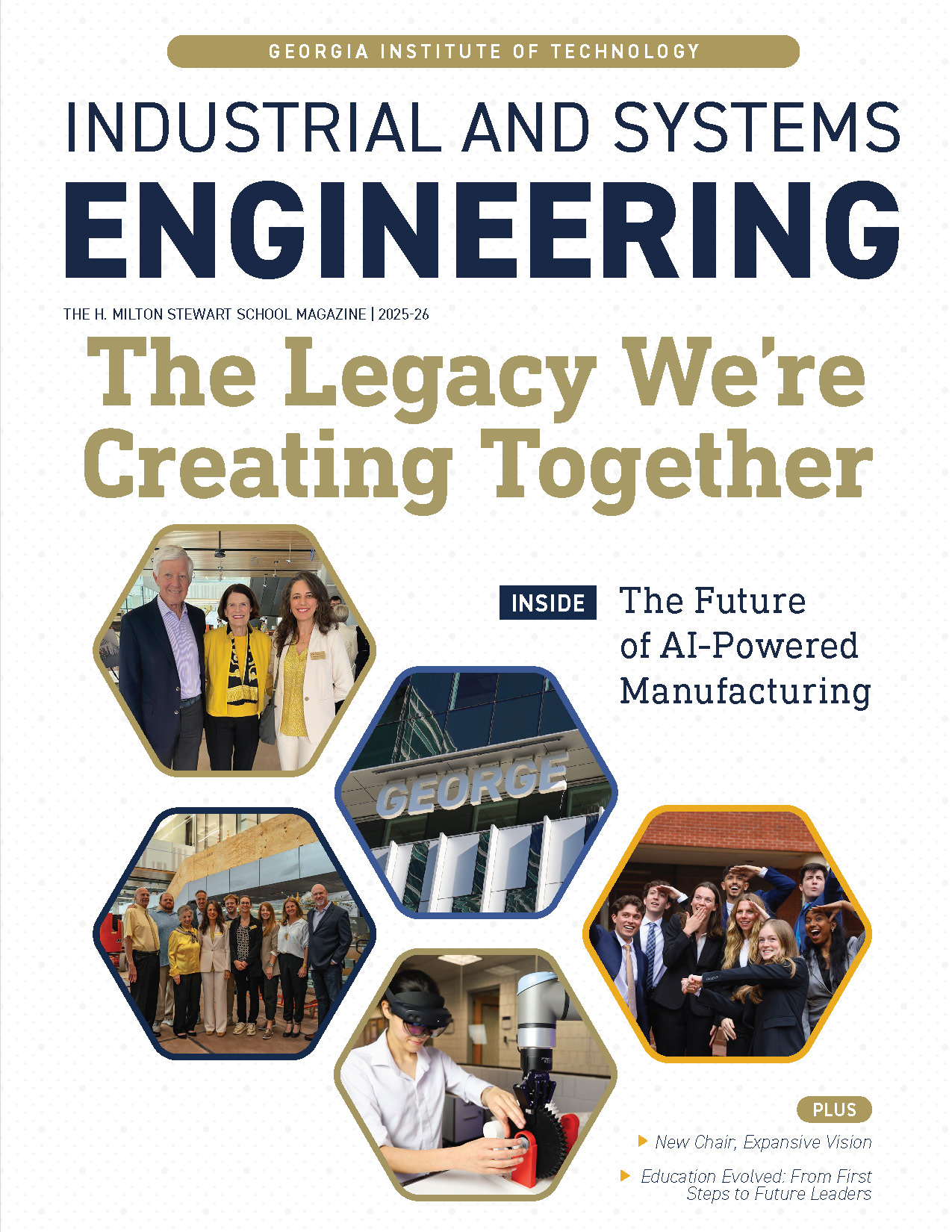
ISyE is upskilling and reskilling the pipeline of K-12 to graduate students to become leaders in manufacturing and solve complex, real-world problems. In 2026, ISyE is moving into a new 18-story home, George Tower, in Tech Square — providing a vibrant hub for strategic partnerships and interdisciplinary collaborations that advance its research and education programs.
“Moving forward, we are excited to expand ISyE’s leadership and impact in research and education across key areas — from advanced manufacturing and supply chains to optimization, AI, health systems, sustainability, and beyond,” shared Keskinocak.
Community Voices

HOW IS ISyE DEVELOPING STUDENTS TO BECOME LEADERS IN ADVANCED MANUFACTURING AND SOLVE COMPLEX, REAL-WORLD PROBLEMS?
“ISyE brings together cutting-edge research, a rigorous curriculum, and strong industry connections all in one place, but what stands out to me is its energy and sense of community. From day one, I felt pushed to think bigger and bolder, take risks, and tackle real-world challenges in ways I had not imagined before.”
— Michael Biehler (Ph.D. IE 2024)
Assistant Professor, University of Wisconsin-Madison

WHAT SKILLS WILL ISyE STUDENTS NEED FOR THE FUTURE OF AI-POWERED MANUFACTURING?
“Beyond strong technical skills in data analytics, optimization, and ML, students will need deep domain knowledge of manufacturing processes and the ability to collaborate effectively with domain experts across engineering and operations teams. AI alone cannot solve problems without context.”
— Richie Chen
Graduate Student, ISyE

HOW IS AI REVOLUTIONIZING THE MANUFACTURING INDUSTRY?
“AI is transforming manufacturing by enabling real-time optimization of key performance indicators, such as throughput, yield, quality, and tardiness. With predictive and prescriptive analytics, operations can shift from reacting to problems to anticipating and preventing them. This revolution makes manufacturing more efficient, flexible, and capable of delivering high-quality output at scale.”
— Ayush Mohanty
Graduate Student, ISyE

HOW IS ISyE DEVELOPING STUDENTS TO BECOME LEADERS IN ADVANCED MANUFACTURING AND SOLVE COMPLEX, REAL-WORLD PROBLEMS?
“ISyE offers one of the nation’s most comprehensive programs in our field — spanning advanced manufacturing, engineering statistics, and optimization. In addition to ISyE’s broad curriculum and faculty expertise, students benefit from research opportunities with leading global companies, such as Apple, Boeing, and Samsung, to solve real-world challenges.”
— Shancong Mou (M.S. CSE 2021, Ph.D. IE 2024)
Assistant Professor, University of Minnesota Twin Cities

WHAT SKILLS WILL ISyE STUDENTS NEED FOR THE FUTURE OF AI-POWERED MANUFACTURING?
"We will need to speak three languages at once: data, machines, and people. Knowing how AI and other ML tools work is essential, but so is critical thinking to ask whether a model fits the problem instead of using it on autopilot.”
— Mahya Qorbni
Graduate Student, ISyE
“Moving forward, we are excited to expand ISyE’s leadership and impact in research and education across key areas — from advanced manufacturing and supply chains to optimization, AI, health systems, sustainability, and beyond.”
— PINAR KESKINOCAK, H. MILTON AND CAROLYN J. STEWART SCHOOL CHAIR AND PROFESSOR, ISyE



Industrial and Systems Engineering
This story originally appeared in the 2025-26 issue of the Industrial and Systems Engineering magazine.